
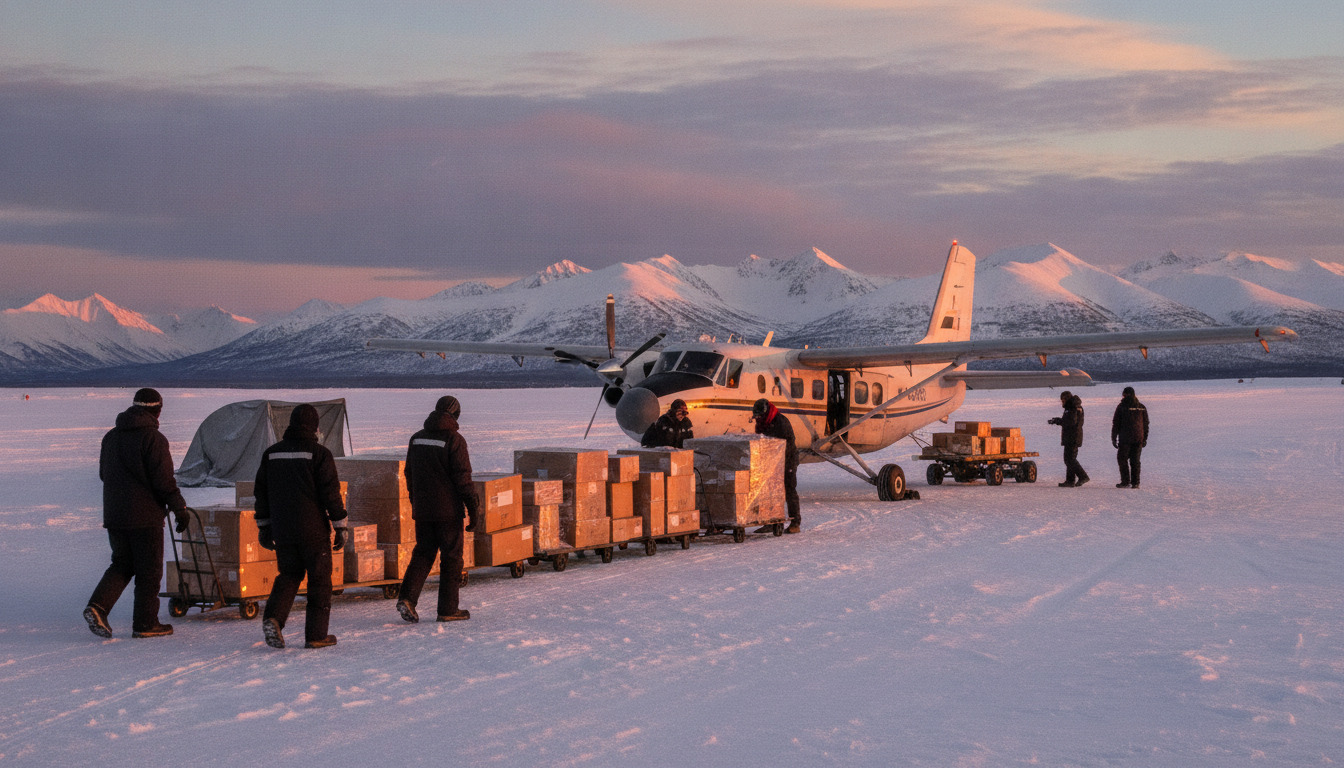
Two states quietly wreck more shipping budgets than any surcharge on your invoice. A box that costs $9 to send from Ohio to Georgia can cost $38 to reach Anchorage — and $52 if it lands in a bush community off the road system.
Most shippers never see it coming, because the damage doesn’t show up as a single line item. It arrives as a base rate built on an air network, stacked with a remote area surcharge, then multiplied by a fuel percentage.
Here’s what shipping to Alaska and Hawaii actually costs in 2026, and the seven levers that bring it down.
Why these two states cost so much
The answer is simple geography. UPS and FedEx move mainland ground freight on trucks. There is no truck route to Honolulu, and the road network in Alaska serves a small fraction of the state’s communities.
So packages ride aircraft. That means three things happen to your rate at once:
- The base rate is an air rate. Ground service to Alaska and Hawaii is limited or unavailable at UPS and FedEx, so you’re often paying a premium product price even when you selected the cheapest option shown.
- A remote or extended area surcharge applies. This is the big one, and it’s separate from the standard delivery area surcharge you already know.
- Fuel surcharge compounds it. Fuel is a percentage applied to the base rate plus most accessorials — and air fuel percentages run higher than ground.
The 2026 surcharge numbers
The remote area fees moved again this year. Current published figures:
| Surcharge | 2026 amount |
|---|---|
| UPS remote area surcharge, Alaska | $46.25 per package |
| UPS remote area surcharge, Hawaii and contiguous 48 | $16.50 per package |
| FedEx delivery area surcharge range, AK/HI | $4.45 to $46.00 per package |
| USPS extended area surcharge | $0 |
Read that last row twice. USPS applies no remote area surcharge, no residential surcharge and no fuel surcharge. The published rate is the rate you pay.
All figures are indicative published rates. Your actual cost depends on your carrier agreement, service level and destination ZIP.
What a real package costs
Take a 5 lb box, 12x9x6 inches, going residential from Chicago to Anchorage. Rough published-rate comparison:
| Option | Estimated landed cost | Transit |
|---|---|---|
| USPS Priority Mail | $22 to $32 | 3 to 5 days |
| USPS Ground Advantage | $18 to $28 | 4 to 7 days |
| UPS air service + remote surcharge + fuel | $75 to $110 | 2 to 3 days |
| FedEx air service + DAS + fuel | $70 to $105 | 2 to 3 days |
The gap is not 10 or 20 percent. It’s frequently three to four times. On a store shipping 40 Alaska and Hawaii orders a month, routing them correctly is worth roughly $2,000 monthly.
Seven ways to pay less
1. Default these two states to USPS
This single rule captures most of the available savings. Build a shipping rule in your platform: if the destination state is AK or HI, quote and buy USPS. Priority Mail and Ground Advantage use flat zone-based pricing that doesn’t care that the middle leg was a 737.
2. Use Priority Mail Flat Rate for anything dense
Flat Rate ignores weight entirely. For heavy, compact items — tools, books, parts, canned goods — a Medium Flat Rate box to Hawaii costs the same as one to Nevada. This is the single biggest per-box win available on dense freight.
3. Check the ZIP against the remote list, not the state
Not every Alaska ZIP triggers the $46.25 tier. Anchorage, Fairbanks and Juneau are far cheaper to reach than off-road communities. If you must use UPS or FedEx, run the destination against the current remote area ZIP list before you commit — the difference between tiers can exceed $30 on the same shipment.
4. Consolidate multi-item orders into one box
Remote area surcharges are charged per package, not per shipment. Splitting an order into three boxes triggers the fee three times. On an Alaska order, a split shipment can add $90 in surcharges alone. Right-size into a single carton whenever the weight allows.
5. Stop offering free shipping to AK and HI by default
Most storefronts set a free shipping threshold based on mainland economics, then quietly eat a $70 loss every time an Anchorage order clears it. Either exclude the two states from your free shipping promotion, or set a separate, higher threshold for them. Buyers in both states are used to this and rarely abandon over it.
6. Charge actual rates at checkout
If you’re using flat-rate checkout shipping, live-rate these two states instead. Showing a real $24 USPS quote is honest, converts fine, and protects your margin far better than absorbing the difference silently.
7. Audit your invoices for misapplied tiers
Remote area classifications change as carriers add and drop ZIP codes. Billing errors on these high-value surcharges are common and worth catching — a single wrongly applied $46.25 charge is worth more than dozens of typical billing disputes. Pull a quarterly report filtered to AK and HI destinations and check the tier applied against the published list.
Hawaii has one extra wrinkle
Hawaii’s surcharges are lower than Alaska’s, but inter-island delivery adds its own cost. A package to Honolulu on Oahu is straightforward. A package to Molokai, Lanai or the less-populated parts of the Big Island can pick up an additional remote tier. If you ship regularly to Hawaii, segment your data by island rather than treating the state as one destination.
Hawaii also has agricultural inspection rules on certain inbound goods — plants, produce and some food items. That’s a compliance issue rather than a cost issue, but a rejected shipment costs you the freight twice.
The bottom line
Alaska and Hawaii are the clearest case in domestic parcel where the default carrier is almost never the right one. UPS and FedEx built premium air networks to serve them, and they price accordingly. USPS built flat zone pricing and absorbs the air leg.
Set one routing rule, consolidate your boxes, and stop giving away free shipping on the two most expensive destinations in the country. Most shippers recover the difference within a single billing cycle.
At ShipPayLess, we help shippers compare live rates across carriers on every parcel — including the ones headed to the expensive ZIP codes. Compare your Alaska and Hawaii rates now and see what you’re overpaying.


 FR
FR  EN
EN