
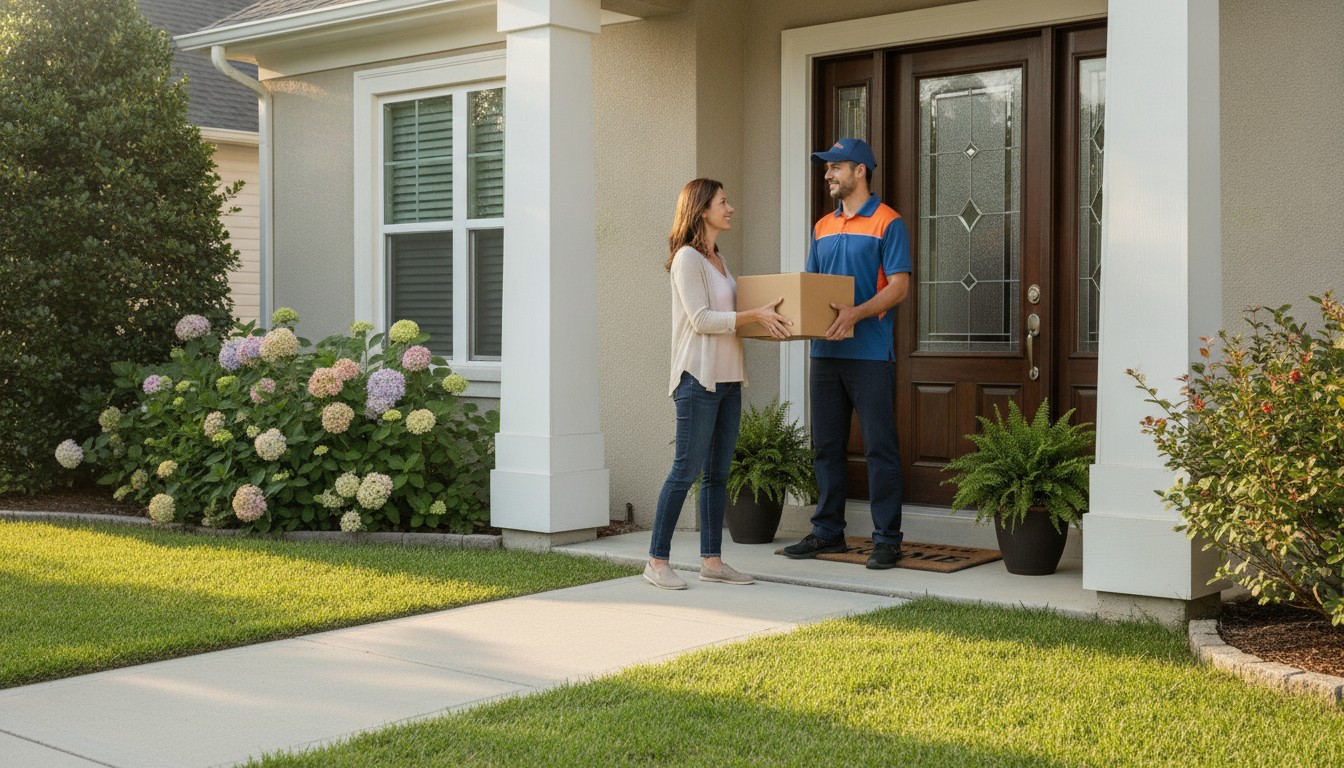
If most of your packages go to people’s homes, one quiet line item is eating your margins: the residential surcharge. It rarely appears on a rate quote, but it lands on nearly every invoice — and in 2026 it climbed faster than the base rate itself.
For high-volume shippers, this single fee can add thousands of dollars a year. The good news: unlike fuel or general rate increases, the residential surcharge is one of the most controllable costs in parcel shipping. Here is exactly how it works in 2026 and seven ways to pay less.
What is the residential surcharge?
Carriers classify every delivery address as either commercial (a business with a loading dock or storefront) or residential (a home, including home-based businesses and apartments). Residential stops are more expensive to serve: they are spread out, drivers make fewer deliveries per mile, and there is no dock to drop a pallet. To recover that cost, UPS and FedEx add a flat residential surcharge to every home delivery.
The catch is that the carrier — not you — decides whether an address is residential. A home business you treat as commercial will still be flagged residential and surcharged automatically.
2026 residential surcharge rates
For 2026, the residential fee rose well above the roughly 5.9% headline general rate increase:
| Carrier / service | 2025 | 2026 | Change |
|---|---|---|---|
| FedEx Ground & Home Delivery (residential) | $5.95 | $6.45 | +8.4% |
| UPS Ground (residential) | ~$5.95 | $6.50 | +9%+ |
| UPS Air (residential) | — | $7.00 | Higher tier |
That is per package — not per shipment. Ship 200 home deliveries a week and the residential surcharge alone adds well over $67,000 a year before fuel is layered on top (fuel surcharge applies to the residential fee too).
Why the fee stacks up so fast
The residential surcharge rarely travels alone. On a single home delivery to a rural ZIP code, you can face residential, Delivery Area Surcharge (DAS), fuel, and — if the box is large — additional handling. A shipment that trips several of these can carry $40 to $300+ in surcharges on top of the base rate. The residential fee is the most common one because the majority of e-commerce parcels go to homes.
Two factors make it worse in 2026: the DAS ZIP-code lists keep expanding (so more « normal » addresses now also trigger an extended-area fee), and the percentage-based fuel surcharge is applied after the residential fee, compounding it.
7 ways to cut the residential surcharge
- Route business orders to commercial addresses. When a customer offers a work address or you ship B2B, use the commercial address — no residential fee applies.
- Use carrier economy services that hand off the last mile. UPS Ground Saver and FedEx Ground Economy pass the final delivery to the postal service, which folds residential delivery into the rate instead of charging a separate surcharge — ideal for lightweight, non-urgent parcels.
- Rate-shop every parcel across carriers. The postal option frequently has no standalone residential fee, so multi-carrier shopping per shipment often wins on home deliveries.
- Negotiate a surcharge cap or discount. Residential fees are negotiable at volume. Push for a fixed cap or a percentage discount, not just a lower base rate — many shippers only negotiate the base and leave accessorials untouched.
- Audit every invoice. Carriers misclassify commercial stops as residential more often than you would think. A weekly audit catches wrongly applied residential fees and recovers 3–7% of spend through refunds.
- Consolidate multi-box orders. The surcharge is per package. Combining two boxes into one right-sized carton removes a full residential fee per order.
- Reassess your carrier mix quarterly. Regional carriers in dense metros sometimes skip the residential surcharge entirely — worth testing on your highest-volume lanes.
When the fee is unavoidable
For urgent, heavier, or oversized home deliveries, the residential surcharge is simply part of the cost — the postal hand-off services are too slow or have weight caps. In those cases, the win comes from negotiation and auditing rather than service swaps. Build the fee into your shipping price or free-shipping threshold so it never silently erodes margin.
All fee figures here are indicative and vary by service, zone and your specific carrier agreement.
Bottom line
The residential surcharge is small per parcel but relentless at scale — and in 2026 it is rising faster than the base rate. Treat it as a controllable cost: route smartly, lean on postal hand-off services, negotiate the accessorial, and audit every invoice.
Want to see which carrier and service deliver your home orders for the lowest all-in cost? Compare your shipping options with ShipPayLess and stop overpaying on every parcel.
 FR
FR  EN
EN