
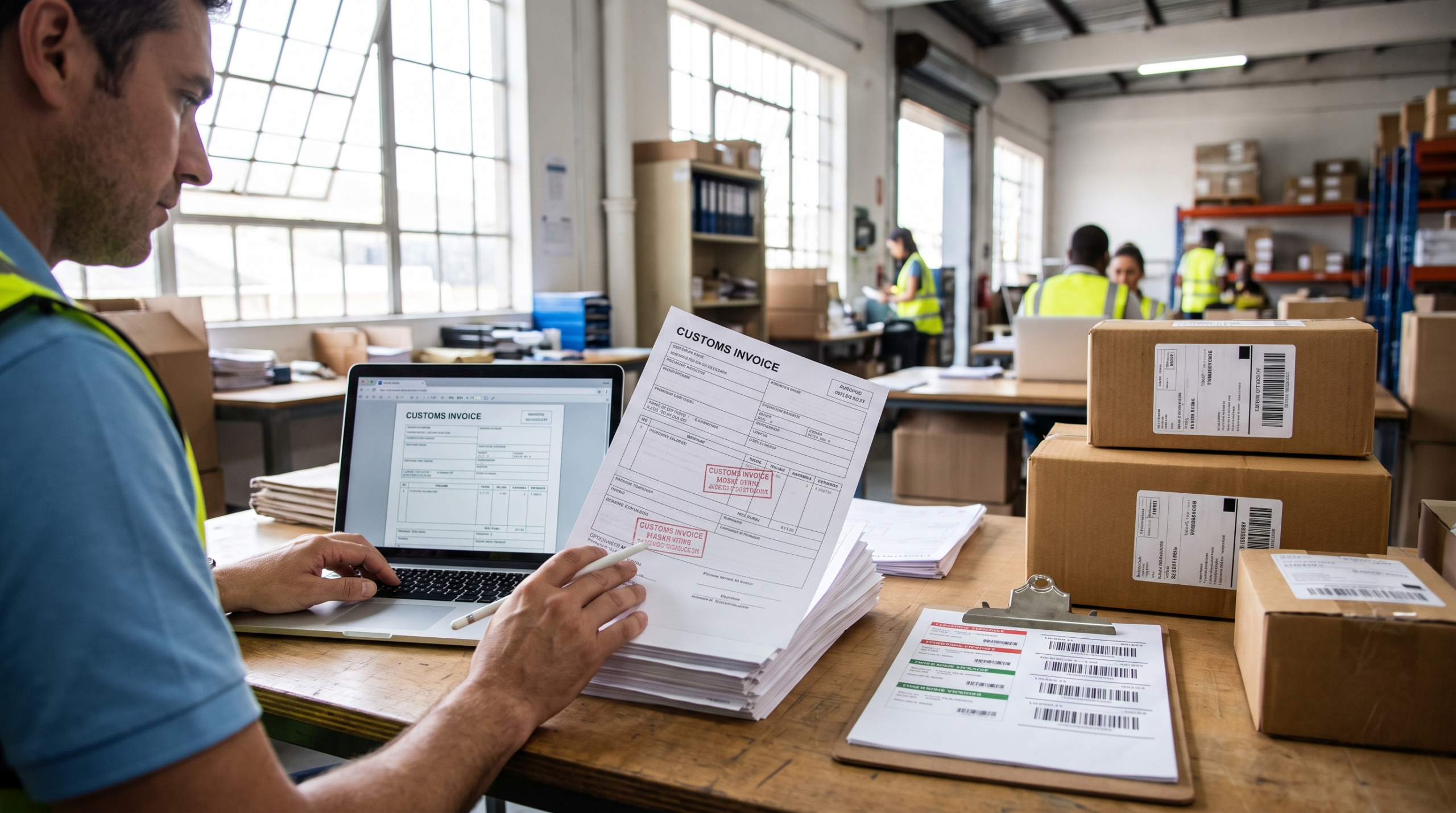
Most of the 2027 rate increase is something you can only absorb or negotiate. This one you can delete outright.
From January 18, 2027, FedEx starts charging $25 for non-electronic trade documents and $5 for a manually completed paper air waybill. Both are new line items. Neither is tied to weight, zone, size or distance. They are charged purely because you handed the carrier paper instead of data — which means the fix is a settings change, not a packaging project or a rate negotiation.
If you send even a modest number of international parcels, this is the cheapest saving available to you all year. Here is exactly what triggers each fee and how to get to zero.
Paper document fees 2027: what you will be charged
| New fee | Amount | Effective | What triggers it |
|---|---|---|---|
| Non-electronic trade documents | $25 per shipment | January 18, 2027 | Customs paperwork (commercial invoice and friends) submitted on paper instead of electronically |
| Manual paper air waybill | $5 per shipment | January 18, 2027 | A handwritten or manually completed air waybill rather than a system-generated label |
Stack them and a single international parcel prepared the old-fashioned way carries $30 in avoidable fees before you have paid a cent of actual freight. Amounts are indicative and vary by service, origin and your negotiated agreement — check your own rate sheet, and note that some agreements waive or cap new accessorials while others pass them straight through.
Put that next to the rest of the 2027 increase
The headline 2027 general rate increase is 5.9% on average, effective January 4. But of roughly 158 surcharge line items, about 95 rise by more than that headline, with a median around 6.25%. The paper fees are different in kind: they are not a percentage on top of what you already pay, they are a flat penalty on a habit. That makes them disproportionately expensive for low-value shipments.
The math, by volume
Assume you are paying both fees on every international parcel, which is the worst case for a shipper still working on paper:
| International parcels per month | Monthly cost | Annual cost |
|---|---|---|
| 10 | $300 | $3,600 |
| 50 | $1,500 | $18,000 |
| 200 | $6,000 | $72,000 |
| 500 | $15,000 | $180,000 |
There is no packaging redesign, no carrier switch and no volume commitment behind those numbers. It is an afternoon of configuration.
Fix one: turn on electronic trade documents
Electronic trade documents (ETD) means you submit your customs paperwork as data or an uploaded file instead of printing three copies and stuffing them into a pouch on the box. Carriers have offered it for years; what changes in 2027 is that not using it now costs money.
What ETD typically covers:
- Commercial invoice — either one you generate yourself and upload, or one the carrier’s system builds from your shipment data.
- Pro forma invoice — carrier-generated, using letterhead you upload once.
- Additional customs documents — typically up to four more files per shipment, which is where certificates, licences and permits go.
On FedEx Ship Manager the switch lives in Preferences under International Preferences: enable ETD, upload a letterhead image and a signature image once, and save. Every later international shipment inherits the setting. Setup differs on Ship Manager Software, Web Services and Server, and if you ship through a multi-carrier platform or a marketplace integration the toggle sits in that platform’s carrier settings instead.
Two limitations to plan for
- You still print the label. ETD removes the customs paperwork from the outside of the box, not the shipping label itself.
- Some destinations still demand originals. A handful of countries require paper documents to travel with the goods regardless. Check availability per destination rather than assuming your whole lane list is covered — and budget the $25 for the lanes that genuinely cannot go paperless.
The side benefits are real and pre-date the fee: faster clearance, fewer customs holds from documents that got separated from the parcel, no commercial invoice with your margins on it taped to the outside of a box, and no printing cost.
Fix two: stop producing manual air waybills
The $5 fee is narrower and easier. A manual air waybill means a handwritten or hand-completed form rather than one generated by shipping software. In practice it shows up in three places:
- Counter drop-offs where staff fill in a form because nobody created the label upstream.
- Pre-printed blank stock kept in a drawer for one-off or rush shipments.
- Printer failures where the fallback procedure is paper. A spare thermal printer costs less than a few months of this fee at moderate volume.
Route every shipment — including the rushed ones — through your shipping platform, and this fee never appears.
A five-step checklist before January 18
- Audit last quarter’s international invoices. Count how many shipments would have triggered each fee. That number is your annual saving.
- Enable ETD on every account and platform you ship from. Shippers commonly turn it on in one tool and keep paying on a second, forgotten channel.
- Upload letterhead and signature files once, so nobody has an excuse to fall back to paper mid-rush.
- Check your destination list for countries that require original documents, and price those lanes with the $25 included.
- Kill the blank waybill stock. Remove it from the packing station and write a printer-failure procedure that does not involve a pen.
Watch for the same move at other carriers
Paper-penalty fees tend to spread. Once one carrier proves shippers will pay $25 rather than change a setting, the others follow within a cycle or two. Treat going paperless as the permanent default for international shipping rather than a FedEx-specific workaround, and the next carrier’s version of this fee costs you nothing.
Conclusion
Paper document fees 2027 add $25 per non-electronic trade document and $5 per manual air waybill starting January 18. Unlike the 5.9% general rate increase, this is not a cost to absorb — it is a configuration you have not finished. Turn on electronic trade documents, clear the blank waybills out of the packing station, and the fee never lands on your invoice.
ShipPayLess helps shippers find the surcharges they pay by accident and the settings that remove them. Run a surcharge audit on your shipping invoices before the 2027 fees take effect.
All amounts above are indicative and vary by carrier, service, destination and your negotiated agreement. Confirm current fees and ETD availability against your carrier’s published service guide.
 FR
 EN