
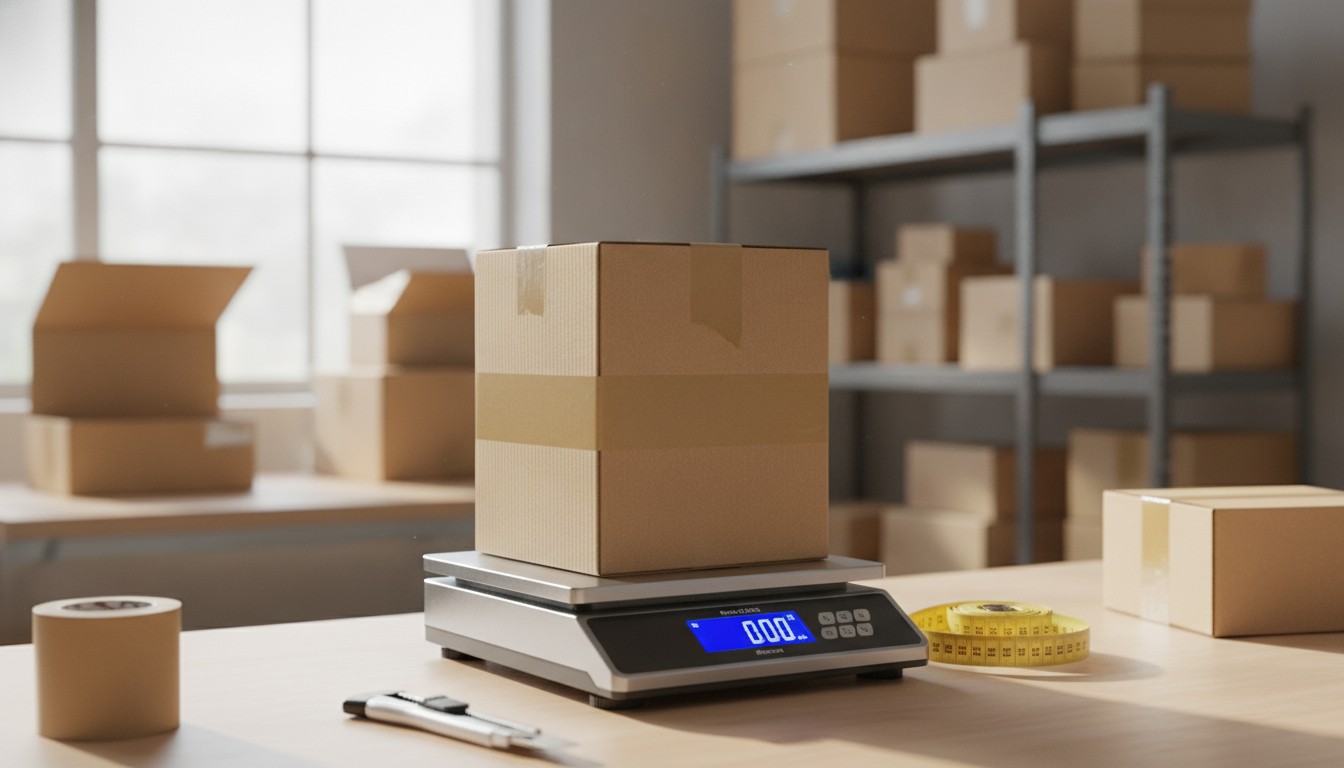
If you ship small, dense packages—books, auto parts, cosmetics, coffee, candles, hardware—you may be leaving money on the table with every single label. USPS cubic pricing charges based on the the size of your box and the distance it travels, not by its weight. For the right package profile, it is one of the most reliable ways to pay less per parcel in 2026.
And with Ground Advantage's commercial rates having absorbed roughly 16% in combined year-over-year increases—including the July 12, 2026, changes to the DIM divisor and round-up calculation—the gap between standard weight-based rates and cubic rates has never been wider.
How USPS Cubic Pricing Works
Instead of the usual weight-and-zone rate chart, cubic pricing uses ten volume tiers ranging from 0.1 to 1.0 cubic feet. You calculate your box’s cubic volume as follows:
- Length × Width × Height (in inches) ÷ 1.728 = cubic feet
- Round up to the next tier (0.1, 0.2, 0.3 … 1.0)
- Your rate is determined by the tier and the shipping zone—weight is not taken into account up to the 20-pound limit
A 10×8×6-inch box has a volume of 480 cubic inches, or 0.28 cubic feet—Tier 0.3. Whether that box contains 3 pounds of clothing or 18 pounds of machined parts, the price is the same.
Eligibility Rules for 2026
Cubic pricing applies to USPS Ground Advantage and Priority Mail commercial shipments that meet all of the following criteria:
- Volume of 1 cubic foot (0.5 for Priority Mail cubic softpack) or less
- Weight of 20 pounds or less
- Longest side 18 inches or less
- No rolls or tubes
The catch: cubic rates are available only to businesses. You won't find them at the retail counter. They are accessed through shipping platforms, consolidators, and resellers—which is exactly where a discount shipping partner earns its keep.
What the savings Look Like
Illustrative examples comparing 2026 standard Ground Advantage commercial rates to cubic rates (actual prices vary by zone, platform, and current USPS pricing):
| Package | Standard rate (approx.) | Cubic rate (approx.) | Savings |
|---|---|---|---|
| 3 lb, 10×8×6″ box, Zone 5 | $11.57 | $9.20 | ~$2.37 |
| 8 lb, 12×9×4″ box, Zone 4 | $13–$15 | $9–$11 | ~$3–$4 |
| 15 lb, 12×10×8″ box, Zone 7 | $25–$30 | $19–$23 | ~$5–$7 |
Multiply the $2–$6 savings by 300 shipments per month, and cubic pricing quietly yields $600–$1,800 per month—with no changes to your product or carrier.
Cubic pricing vs. dimensional weight: two sides of the same coin
Dimensional weight penalizes large, lightweight boxes; cubic pricing rewards small, heavy ones. Together, they send one clear message for 2026: Box size is the single biggest cost factor you can control. If your packages are large and light, avoid DIM charges by selecting the correct size. If they are small and dense, make sure every label is based on cubic volume. Assessing which of your SKUs fall into each category is often more valuable than any negotiation with a carrier.
How to Actually Calculate Cubic Rates
- Measure accurately and round off wisely: Shaving half an inch off one dimension can drop you a full tier. A 9×8×6″ box (0.25 cu ft) is rated Tier 0.3, but an 8.5×8×6″ box (0.24) still rounds to 0.3 — while an 8×8×5″ box (0.19) drops to Tier 0.2;
- Standardize 2–3 box sizes engineered to fall just below tier breaks and the 18-inch limit;
- Ship through a commercial platform or reseller that goes through cubic rates—retail counters never will;
- Watch the 20-pound line: At 20.1 lb, the package reverts to weight-based pricing, and the July 2026 rounding rules mean it is rounded up to 21 lb;
- Check out every label: For some zones and profiles, UPS or FedEx lightweight services are still the best option. The cheapest carrier varies from package to package.
The bottom line
USPS cubic pricing is one of the few genuine bargains left in a year of relentless rate increases — but only for shippers who are set up to access commercial rates and are disciplined about box sizes. ShipPayLess Gives everyday shippers access to deeply discounted commercial rates through USPS, UPS, and FedEx, and compares rates for every package so you always pay the lowest available price. Get a free quote today and find out what your small, heavy boxes should really cost.
All rates shown are approximate and vary by zone, agreement, platform, and current carrier pricing.
 EN
EN  FR
FR