
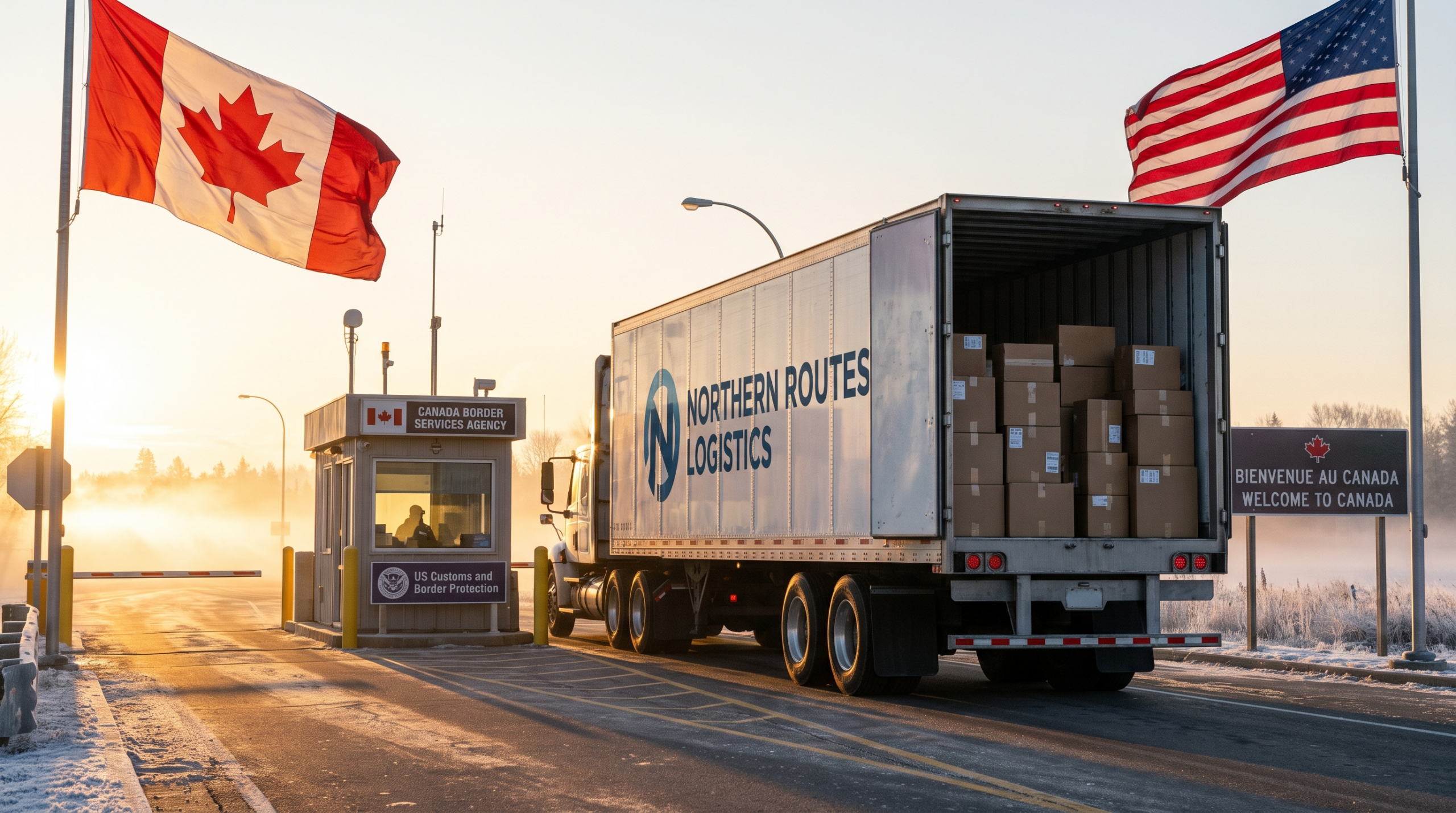
Canada is the number-one export market for U.S. parcel shippers, and it should be the easiest one. Same time zones, shared carriers, a free-trade agreement. Yet Shipping to Canada from the U.S. This is where many small shippers quietly lose $15 to $60 per package: brokerage fees that were never included in the quote, sales tax collected upon delivery, and return shipping costs when a Canadian customer refuses to pay them.
The solution isn't a magic carrier. It's understanding three codes—CAD $20, CAD $40, and CAD $150—choosing the right service for each, and never allowing a ground parcel to cross the border without a brokerage plan.
This 2026 guide breaks down the actual cost of shipping a package from the U.S. to Canada, carrier by carrier, and offers seven practical ways to save money on every shipment.
The three Canadian thresholds that determine your costs
Under CUSMA (the USMCA), Canada applies different de minimis thresholds depending on how a package enters the country. That single factor accounts for most of the cost difference between carriers.
| Declared value (CAD) | Courier (UPS, FedEx, DHL, Purolator) | Mail (USPS to Canada Post) |
|---|---|---|
| Up to $20 | No duty, no tax | No duty, no tax |
| $20.01 to $40 | No duty, no tax | Tax collected (GST/HST/PST) plus a $9.95 handling fee |
| $40.01 to $150 | Tax collected, no duty; a brokerage fee applies | Tax plus a $9.95 handling fee |
| Over $150 | Duty (unless the goods originate in the U.S. or Mexico), tax, and brokerage fees | Duty, tax, and a $9.95 handling fee |
Two things stand out. First, a courier package qualifies for a CAD $40 duty-free allowance that a postal package does not. Second, the CAD $150 duty exemption applies only to goods manufactured outside North America: a U.S.-made product valued at over CAD $150 is still shipped duty-free if you certify its origin on the commercial invoice.
Canadian sales tax ranges from 5% (Alberta and the territories) to 13% to 15% in HST provinces such as Ontario, Nova Scotia, and New Brunswick. For a US$1,410.00 order shipped to Toronto, the recipient will be asked to pay approximately US$1,413.00 unless you collect the tax upfront.
Brokerage fees: the cost that isn't listed on your receipt
Every dutiable or taxable package requires a customs declaration. Express services from UPS, FedEx, and DHL include the preparation of the declaration in the shipping rate. Ground services do not. That is why a UPS Ground label with the code US$18 to Vancouver can result in a US$45 shipment once the recipient sees the invoice.
| Service | Brokerage / entry fee (estimated, 2026) | Disbursement fee |
|---|---|---|
| Standard UPS (ground) | CAD $10.75 to $59+ depending on value | 2.7% in duties/taxes paid in advance (min. ~CAD $6) |
| UPS Worldwide Expedited / Saver | Included | 2.7% or bill-to-shipper |
| FedEx International Ground | CAD $10 to $50+ by value tier | 2.5% to 3% advancement fee (min. ~CAD $10) |
| FedEx International Priority / Economy | Included | Advance fee if the recipient pays |
| DHL Express | Included | 2.5% advance payment fee (min. ~CAD $17) |
| USPS Priority Mail International | Canada Post handling fee CAD $9.95 | None |
The pattern is simple: ground shipping is the cheapest listed on the label and the most expensive at the door. For packages valued between roughly CAD $40 and $300, an express-economy service that includes customs clearance often costs less than ground shipping once fees are added, and it arrives two to four days sooner.
Carrier comparison: a 5-pound package from Chicago to Toronto
Estimated published rates for a 5-lb, 12 × 10 × 8-inch box, declared at US$120 (about CAD $165), for residential delivery. Discounted rates through a shipping platform are usually 30% to 60% lower.
| Service | Transit | Label (retail) | Delivery Fees | Approx. total |
|---|---|---|---|---|
| USPS Priority Mail International | 6 to 10 days | $58 to $65 | CAD $9.95 + tax | $85 to $95 |
| Standard UPS | 3 to 6 days | $38 to $48 | Brokerage: ~CAD $30 + disbursement + tax | $80 to $100 |
| UPS Worldwide Expedited | 2 to 3 days | $85 to $105 | Tax only | $100 to $125 |
| FedEx International Ground | 3 to 7 days | $40 to $50 | Entry fee ~CAD $28 + advance payment + tax | $80 to $100 |
| FedEx International Economy | 2 to 5 days | $90 to $110 | Tax only | $105 to $130 |
| DHL Express Worldwide | 1 to 3 days | $95 to $120 | Tax + advance fee | $115 to $145 |
At discounted commercial rates, the express-economy options typically fall within the $55 to $75 range, which is why they are the best choice for most small e-commerce packages heading north.
Paperwork that keeps packages moving
- Commercial Invoice with a plain-language description, HS code (at least six digits), unit value, currency, and country of manufacture for each line.
- CUSMA Certificate of Origin for U.S.- or Mexican-made goods valued at more than CAD $150. This can be indicated on the invoice; no separate form is required, but nine data elements must be included.
- Recipient's phone number and email address so the carrier can collect taxes electronically instead of at the door.
- Canadian postal code in the correct A1A 1A1 format. A missing or incorrectly formatted code results in the same address correction fee you would pay for domestic mail.
7 Ways to Save Money on Shipping to Canada
- Ship DDP (Delivered Duty Paid) and charge duties and taxes to your account. Carriers process DDP parcels more quickly, refusal rates drop to nearly zero, and you avoid the disbursement fee that recipients pay when the carrier covers the cost upfront.
- Send low-value orders under CAD $40 via courier When a customer purchases an accessory or replacement part: no tax, no duty, no brokerage fees.
- Use express-economy for the CAD $40 to $300 range: Brokerage is included, and the discounted price is usually lower than the standard rate plus fees.
- Certify U.S. origin on every invoice for domestically produced goods. It waives duties on amounts over CAD $150 and only requires one additional line.
- Consolidate with a Canadian 3PL or use Section 321 in reverse: If you ship more than 50 Canadian orders per week, sending a pallet to a Canadian fulfillment partner and shipping domestically via Canada Post or Purolator can reduce your per-order cost by 40% or more.
- Watch dimensional weight: For international shipments, UPS and FedEx use a divisor of 139. A box measuring 12 × 10 × 8 inches is charged at 7 lb even if it weighs 3.
- Compare prices on every package across USPS, UPS, FedEx, and DHL via a multi-carrier platform with negotiated rates. The cheapest option varies depending on weight, value, and destination province.
Conclusion: Know the thresholds, choose the right service
Shipping to Canada from the U.S. in 2026 is only expensive when the shipping label and customs clearance plan are chosen separately. Choose a service that matches the declared value, include the country of origin and HS codes on every invoice, prepay duties and taxes to ensure a smooth delivery, and compare carriers based on the total landed cost, not just the shipping label price.
Want to see discounted USPS, UPS, FedEx, and DHL rates to Canada side by side, with customs forms generated automatically and DDP included? Compare rates on ShipPayLess and start paying less for every cross-border package.
The rates, thresholds, and fees listed in this article are approximate as of September 2026 and may vary depending on the carrier, negotiated agreement, exchange rate, and applicable surcharges.
 EN
EN  FR
FR