
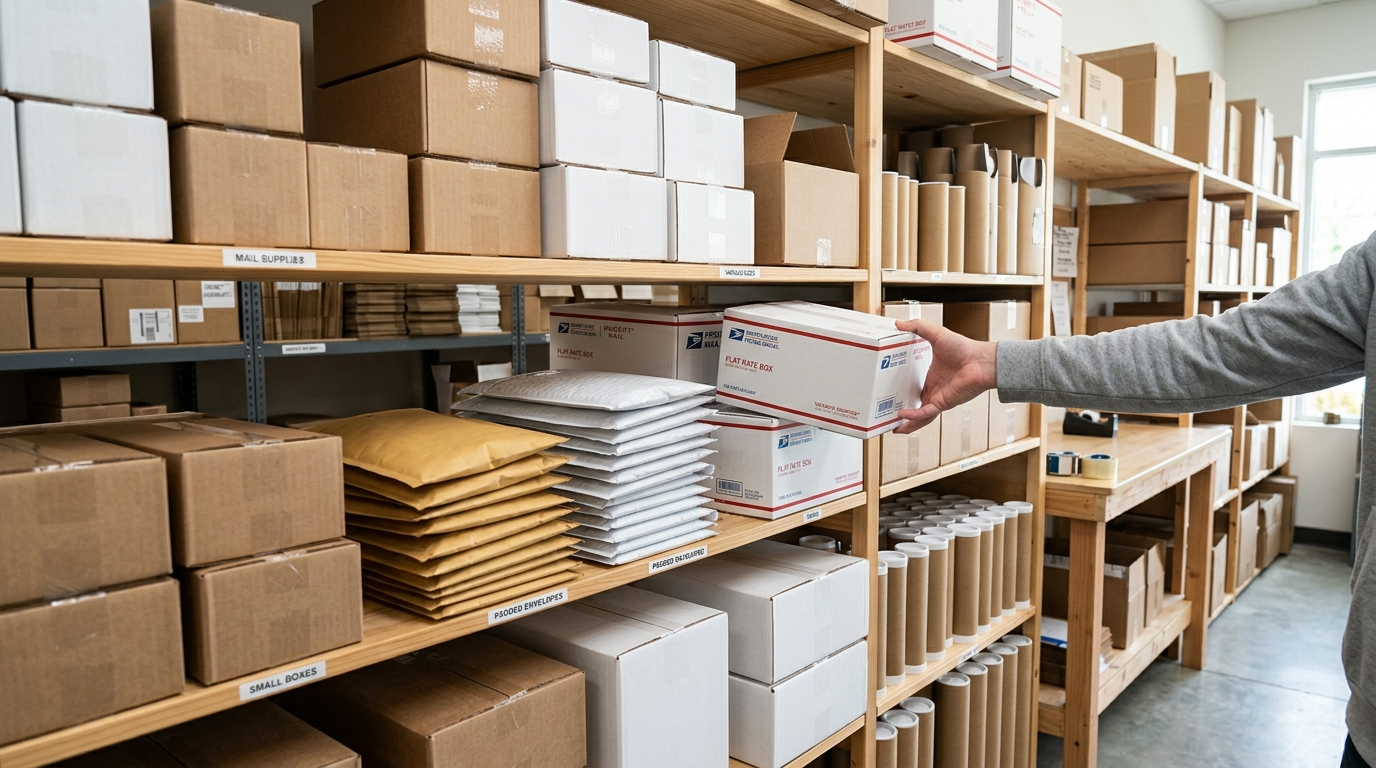
Packaging is one of the most overlooked line items in a shipping budget. A corrugated box purchased at retail costs between $1 and $4, and a padded mailer costs between $0.30 and $1—and if you ship every day, that quietly adds hundreds or thousands of dollars a year to your costs.
Here’s the part many shippers overlook: USPS, UPS, and FedEx all offer free shipping supplies — boxes, padded envelopes, tubes, and paks — as long as you use them with the right service. When used correctly, free carrier packaging can save you $0.50 to $3 on nearly every package you send.
This guide breaks down exactly what each carrier offers for free in 2026, the rules that often trip people up, and how to combine free supplies with discounted labels to reduce your total cost per package.
USPS: The Most Generous Free Supplies Program
USPS offers the widest selection of free packaging, and it’s available to everyone—no business account, no volume requirement:
- Priority Mail boxes in a variety of sizes, including Flat Rate boxes (Small, Medium, Large) and shoe-box-style options.
- Priority Mail padded and legal flat-rate envelopes.
- Priority Mail Express boxes and envelopes for overnight shipments.
You can order as many as you like at store.usps.com with free delivery to your door, or pick them up at any post office. With Small Flat Rate postage starting at around $13.66 in 2026 (rates vary by service and any negotiated pricing), the box itself is free—you pay only for postage.
The rule that catches people
Free USPS packaging is service-specific: a Priority Mail box must be shipped with a Priority Mail label. Using one for Ground Advantage is prohibited, and packages may be re-rated or delayed. There are no free boxes for USPS ground services—you must provide your own packaging for those.
UPS: Free Supplies for Air and Express Services
UPS provides free packaging—Express boxes, padded paks, envelopes, and tubes—for its air and express services, such as Next Day Air, 2nd Day Air, and Worldwide Express. Ordering requires a free UPS account, and since late 2025, UPS has linked supply quantities to your actual shipping volume through a tiered access system, so occasional shippers receive smaller allocations.
As with the USPS, the limitation is the service: UPS Ground requires you to provide your own boxes. If most of your shipments are transported by ground, UPS free shipping will only cover your occasional express shipments.
FedEx: free express packaging, including One Rate
FedEx provides boxes, padded envelopes, tubes, and Pak envelopes for use with its Express services—Standard Overnight, 2Day, International, and notably FedEx One Rate. That last combination is a real money-saver: One Rate offers a flat rate based on packaging type and zone, so a free FedEx box plus a flat-rate One Rate label makes the total cost extremely predictable for small, high-density shipments. Ground services, once again, require you to provide your own packaging.
What Is the Actual Value of Free Supplies Per Year?
Estimated math for a shipper sending 20 packages a week (actual figures vary depending on your mix and any negotiated rates):
- Replacing purchased boxes—which cost an average of $1.25 each—with free carrier boxes for half of your volume saves about $650 per year.
- Swapping out purchased padded mailers ($0.50) for free carrier envelopes on 5 shipments per week saves about $130 per year.
- Add in the time saved by not having to source and restock packaging, and the practical value is even greater.
For high-volume shippers, the savings increase proportionally—at 200 packages a week, free packaging can be worth several thousand dollars a year.
When Free Boxes Are NOT the Cheapest Option
Free shipping is only beneficial if the service associated with it is competitive for that package:
- A 1-pound item that fits in a poly mailer usually costs less to ship via ground economy services in your own $0.10 mailer than in a free Priority Mail box.
- Flat-rate pricing is only more advantageous than weight-based pricing when the items are heavy for their size or are being shipped to remote areas.
- Oversized free boxes can result in dimensional weight charges on services billed by size—never choose a larger size just because the box is free.
The best approach is to compare rates for each shipment first, then check whether a free box is available for the best option.
How to Incorporate Free Supplies into Your Routine
- Order a starter assortment from each carrier you use so you can match the box to the service when you apply the label.
- Keep free Priority Mail and FedEx One Rate boxes stored separately from your own inventory to avoid service mismatches.
- Reorder monthly — carrier deliveries may take one to two weeks.
- Track your packaging costs per shipment; this makes the savings visible and helps you stay on track.
The bottom line
Free shipping supplies are one of the few shipping discounts that require no negotiation: USPS boxes for everyone, and UPS and FedEx express packaging for account holders. Combine them with discounted commercial-rate labels, and you can reduce both components of your cost per package.
Do you want the label side handled as well? ShipPayLess Gives everyday shippers access to deeply discounted commercial rates across carriers—with no volume commitments. Combine $0 packaging with labels priced below retail, and watch your cost per shipment drop.
The prices and fees listed are for illustrative purposes only for 2026 and vary by service, agreement, and destination.
 EN
EN  FR
FR