
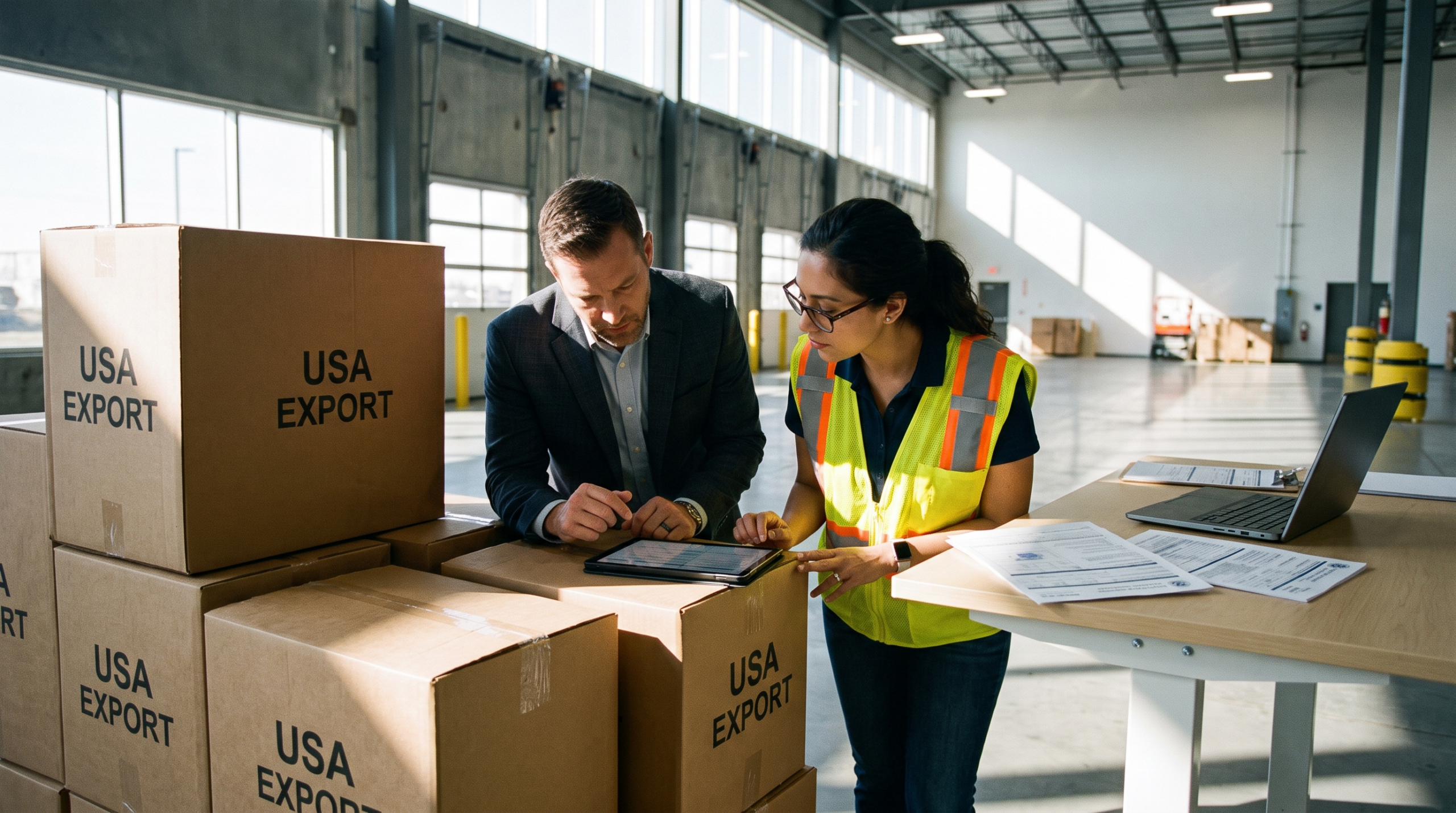
If you import goods into the United States and later ship some of them back out of the country, you are probably leaving money with U.S. Customs that you are entitled to get back. The program is called duty drawback; it has existed since 1789, and it refunds up to 99% of duties, taxes, and fees paid on imported goods that are subsequently exported or destroyed.
Almost no one uses it. Industry estimates have long suggested that the vast majority of recoverable drawback is never claimed—not because companies are ineligible, but because the paperwork seems more difficult than the refund seems worth it. In a tariff environment where import costs have risen sharply, that calculation has changed.
This guide explains what actually qualifies in 2026, which tariffs you can and cannot claim a refund for, the filing costs, and the volume at which it is no longer worth the effort.
What Duty Drawback Actually Is
Duty drawback is a refund mechanism, not a loophole. The logic is straightforward: the United States collects duties on goods entering the country for domestic consumption. If those goods do not remain in the country—because they are re-exported or destroyed under customs supervision—the duty was collected on a transaction that never took place as assumed. Duty drawback refunds that amount.
Three categories are important to most shippers:
- Return of Unused Merchandise — You imported goods, they remained in U.S. inventory, and you later exported them in the same condition. This is the most common scenario for e-commerce and distribution businesses.
- Manufacturing Drawback — You imported components, used them to build something in the U.S., and exported the finished product.
- Refund for Rejected Merchandise — goods that arrived defective, were not as ordered, or did not meet specifications, and were exported or destroyed.
One important limitation: substitution The drawback program, which allows you to match an export to a commercially interchangeable import rather than the exact same unit, is not available for exports to Canada, Mexico, or Chile. The direct identification drawback program is still available.
Which 2026 fees you can claim a refund for — and which you cannot
This is where most claims fail before they even begin. Not every charge listed on your entry summary is recoverable, and the list has changed as a result of recent trade policy.
| Typical load | Eligible for a drawback? | Notes |
|---|---|---|
| MFN rate / normal trade relations duty | Generally, yes | The baseline scenario for which the program was designed |
| Section 301 Tariffs (China) | Generally, yes | Often the largest single recoverable amount |
| Merchandise Processing Fee (MPF) | Generally, yes | Small per entry, but significant in total |
| Harbor Maintenance Fee (HMF) | Generally, yes | Applies to ocean freight entries |
| Section 232 tariffs (steel, aluminum) | No | Explicitly excluded from drawback |
| Antidumping / Countervailing Duties | No | Excluded by law |
| IEEPA Tariffs | Handled separately | Following the 2026 Supreme Court ruling, refunds are processed through a separate CBP procedure, not through the drawback program |
Eligibility rules vary depending on trade policy and administrative guidance—confirm the current treatment with a licensed customs broker before basing a claim on any single tariff program.
The five-year window that nobody uses
The most underappreciated aspect of the drawback is that it is retroactive. Claims can generally cover exports linked to imports dating back five years.
For a business that has been importing and re-exporting for several years without filing claims, the first claim is no small refund—it amounts to five years’ worth of accumulated duties on every qualifying transaction. This is usually what makes the program worth setting up: the backlog covers the cost of the infrastructure, and the ongoing claims generate profit.
The catch is documentation. You need import entry summaries, proof of duties paid, export records with shipping documentation, and a defensible link between the two. If your records from three years ago cannot link a specific export to a specific import entry, that portion of the backlog is lost.
How much it costs and when the money arrives
The downside is that refunds aren't processed quickly. The realistic timeline is divided into two phases.
- Setup and Privileges Approval: Roughly 4 to 12 months. This is when CBP reviews your record-keeping and grants the privileges that make ongoing claims feasible.
- First refund: approximately 6 to 18 months after the process begins.
- Steady state, with accelerated payment option: Refunds are typically issued approximately 3 to 6 weeks after a claim is filed.
Accelerated payment is a benefit worth pursuing. Without it, you have to wait for CBP to settle the entry, which can take years. With it, you are paid upon filing, and CBP reconciles the transaction afterward.
Regarding costs: Most companies use a drawback specialist or customs broker rather than filing in-house, because claims must be filed electronically through ACE and the recordkeeping requirements are strict. Fee structures vary—contingency percentages of the recovered amount, flat per-claim fees, or a hybrid model are all common in the market. Get the fee structure in writing, and confirm who bears the cost if CBP later disallows part of a claim.
Is your volume large enough?
Drawback involves real fixed costs, so it doesn't make sense at every scale. Here's a rough way to think about it:
- Definitely worth it: You pay six figures or more annually in recoverable duties and export a significant portion of what you import. The five-year backlog alone justifies setting up this system.
- Worth modeling carefully: An annual recoverable duty in the mid-five-figure range. The answer depends heavily on how accurate your records are—good ERP data makes this feasible at lower volumes than messy spreadsheets do.
- Probably not yet: low import duty costs, or you export almost nothing. Reevaluate if your international sales grow.
The real test is not «do I import a lot»—it is «do I import goods that later leave the country, and can I prove it?» Businesses that import goods solely for domestic sale have nothing to claim.
How to Get Started
Before calling anyone, gather three things: your total duties paid each year for the past five years, your export volume over the same period, and a sample of records showing whether you can trace a given export shipment back to a specific import entry.
That third item is the one that makes all the difference. An expert can tell you in a single conversation whether your recordkeeping supports a claim—and if it doesn’t, the solution for future claims is usually a matter of adding entry references to your export records, not rebuilding your systems.
Conclusion
Duty drawback is one of the few genuine cost-recovery programs available to U.S. importers, and the five-year retroactive window means that the first claim is usually the largest check a shipping operation will receive all year. It’s a slow, paperwork-intensive process, and it’s not worth the effort for every business—but for anyone importing goods that are later re-exported, ignoring it means giving up to 99% of recoverable duties to the Treasury.
ShipPayLess helps shippers identify the funds already available within their freight and customs expenses—from surcharge audits to cross-border structuring. Find out where your shipping costs are getting out of hand.
The duty amounts, timelines, and eligibility criteria described here are for informational purposes only and may vary depending on trade policy, the type of import, and your specific customs arrangement. Confirm the current rules with a licensed customs broker before filing.
 EN
 FR