
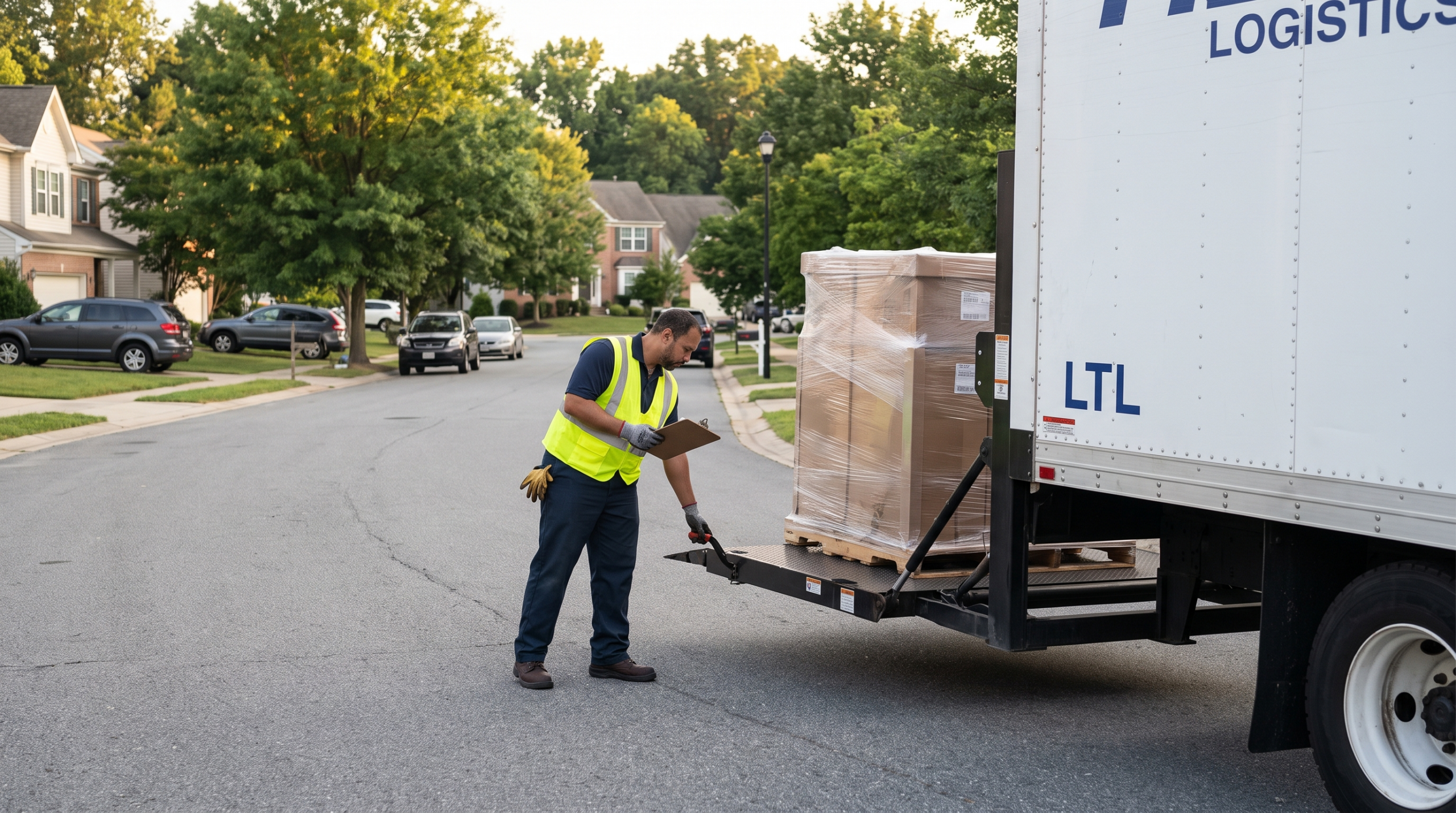
You quoted a pallet at $485, and the invoice came back at $1,085. Nothing went wrong during transit. The shipment was delivered on time, arrived intact, and the driver obtained a signature. The difference is LTL incidental charges — the per-occurrence fees carriers charge for anything beyond moving a forklift from one loading dock to another.
Accessorials are where LTL quietly stops being cheap. Parcel shippers know their surcharge list by heart because it appears on every label. Freight shippers often do not, because accessorials only appear after delivery, buried in a tariff item number that nobody reads. Industry estimates put accessorial inflation at 8–12% through 2026, and on light shipments to hard-to-reach addresses, the fees routinely exceed the linehaul itself.
This is a cost-control issue, not a carrier issue. Almost every fee listed below is triggered by something on your bill of lading—or something missing from it.
What Accessory Charges Actually Are
An LTL rate quote covers one thing: moving a shrink-wrapped, forkliftable pallet between two commercial loading docks during business hours. Any deviation is priced separately, and most are billed per shipment as either a flat fee or a per-hundredweight (cwt) rate with a minimum and a maximum.
The cwt structure is what catches shippers off guard. A liftgate charged at $4.40 per cwt seems insignificant until you notice the $115 minimum—which means a 500-lb pallet pays the minimum charge, not the standard rate. Light freight always pays the minimum, so accessorial charges have the greatest impact on small shipments as a percentage of total cost.
The 2026 fee schedule: two carriers side by side
Below are published figures from Old Dominion’s 100-Q tariff (effective October 5, 2026) and Estes’ accessory schedule (revised November 17, 2025), along with typical market ranges for context. These are list rates — Your negotiated agreement may waive, cap, or discount any of them, and rates change without much notice.
| Accessory | Old Dominion (100-Q) | Estes | Typical market range |
| Liftgate (pickup or delivery) | $4.40/cwt, min $115, max $330 | $4.95/cwt, min $75, max $350 | $75–$200 |
| Residential pickup or delivery | $7.20/cwt, min $125, max $580 | $8.50/cwt, min $75, max $550 | $80–$175 |
| Location with limited access | Billed under the same line item as residential | $85 flat | $100–$250 |
| In-store pickup or delivery | $7.70/cwt, min $125, max $605 | Street-level $10.25/cwt, min $100 | $75–$200 |
| Redelivery | $7.20/cwt, min $175, max $580 | $10.00/cwt, min $85, max $900 | $85–$250 |
| Reconsignment / Diversion | $80 admin + recalculated linehaul | Not published in the quick reference guide | $50–$150 + rerate |
| Appointment or Prior Notice | $30 flat | $30 flat | $50–$100 |
| Hazardous materials | $35 flat | $30 flat | $30–$75 |
| Over 8′ to under 12′ | $495 | $300 | $300–$500 |
| Overlength 20′ or greater | $1,300 | $1,000 | $1,000–$1,300 |
| Holding unit with power unit | Not in the quick reference | $40 per 15 minutes for loads under 20,000 lb; $90.30/hr for loads of 20,000 lb or more | $75–$150/hr |
| Lumper / unloading | Negotiated | Negotiated | $150–$400 |
Note how the two carriers differ. Estes has a lower liftgate minimum ($75 vs. $115) but a much higher redelivery limit ($900 vs. $580). If your freight consists of light pallets delivered to commercial docks, the liftgate minimum is more important. If you ship to addresses where the first delivery attempt is often missed, the redelivery limit is more important. There is no carrier that is universally cheaper—only a carrier that is cheaper for your accessory mix.
Fuel surcharge: the multiplier nobody factors into their budget
Fuel is not a flat fee. It is a percentage of linehaul, recalculated weekly based on a diesel index, and at roughly $5.40 per gallon, it has been in the 44–48% range for LTL. On a $485 linehaul, a 45% fuel surcharge adds about $218—more than any single accessorial on the list.
Two things follow. First, anything that increases your linehaul (a reclassification, a reweigh, or a diversion that reroutes the shipment) also increases fuel costs proportionally, so a $60 rerate can cost closer to $90 all-in. Second, fuel is one of the few line items that is genuinely non-negotiable on its own—the key factor is the base rate by which it is multiplied.
The Five Factors That Most Often Lead to Additional Billing
- An incomplete bill of lading. If you do not specify a liftgate or a residential address, the carrier discovers this upon arrival and charges you anyway—often at a higher «unplanned service» rate, plus a fee for a failed delivery attempt if the driver cannot complete the stop.
- Referring to an address as a commercial address when it is not. Carriers classify based on what is actually at the delivery location, not on what the consignee calls it. Home-based businesses, storage facilities, schools, churches, farms, construction sites, and military bases are routinely reclassified as residential or limited-access locations after the fact.
- No appointment on a receiver that requires one. At $30, a prior-notification fee is the cheapest insurance option on the entire table. A missed delivery due to the dock being closed will cost you a redelivery at a minimum rate of $175—roughly six times as much.
- Wrong class or wrong weight. A density error triggers a reclassification, along with a recalculation of the linehaul and fuel costs based on the new linehaul. Measure and weigh the actual palletized shipment, not the product specification sheet.
- Freight that cannot be handled with a forklift. Any item that is loose, protrudes beyond the pallet, or is stacked in a way that prevents it from being lifted safely will result in handling fees, inside-delivery charges, or a lumper bill.
What actually reduces the number
Start with an audit, because you can’t negotiate a fee you haven’t measured. Gather 90 days’ worth of freight invoices and total each accessory code separately. Most shippers find that two or three codes account for the vast majority of their accessory spending—and those two or three are the ones you bring up in rate negotiations.
Then focus on the structure rather than the rate:
- Negotiate caps and waivers on your top codes, not a blanket discount. Waiving the liftgate fee on residential deliveries is worth more than an additional two-point discount on linehaul if the liftgate fee accounts for 30% of your ancillary charges.
- Declare everything in the BOL. Pre-disclosed services are billed at the standard rate; discovered services are billed at the standard rate plus a wasted stop fee.
- Validate delivery addresses against a commercial/residential flag before the BOL is issued, just as parcel carriers do.
- Consolidate. Accessories are charged per shipment, not per pallet. Two pallets on a single BOL to a single consignee incur one liftgate charge; two separate BOLs incur two.
- Argument inside the window. Carriers generally allow a short period to dispute an additional charge, and a photo of a loading dock at the delivery address is often enough to overturn a residential classification. Uncontested charges become the basis for next year’s rates.
- Retest the parcel at the margin. For a light, compact shipment delivered to a residential address via liftgate, three or four parcels can be more cost-effective than one pallet once the liftgate fee ($115) and the residential delivery fee ($125) are added to the linehaul cost.
The bottom line
LTL surcharges are not hidden—they are published, itemized, and largely predictable. What makes them expensive is that they are determined after your freight is already in transit, by a driver faced with a situation not described in your bill of lading. Describe it accurately, and you pay the standard rate. Leave it blank, and you pay the standard rate plus a penalty.
All figures above are indicative list rates based on published carrier tariffs and market surveys; actual charges vary by carrier, service, route, and your negotiated agreement.
If you'd rather not conduct a freight audit yourself, ShipPayLess Compare carrier rates and additional charges based on your actual shipment details—so you know how much a liftgate will cost you before you receive the invoice.
 EN
 FR