
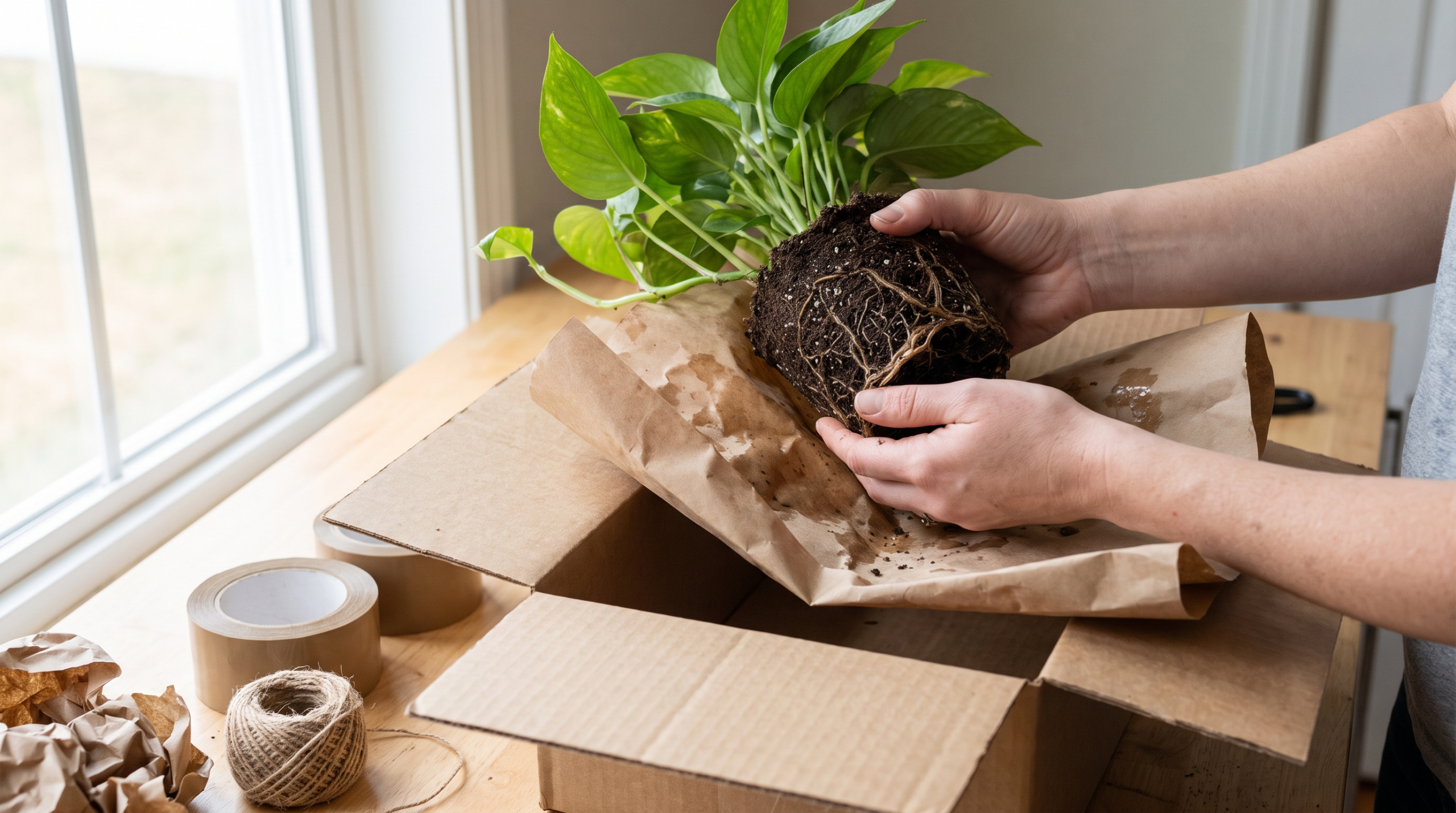
Plants are the only items most shippers send that can die in transit. That single fact changes the cost equation: the the cheapest way to ship plants is almost never the cheapest option, because a $9 ground shipment that arrives with wilted foliage costs you the plant, the refund, and the replacement shipment.
In 2026, the numbers have become even tighter. Ground networks are slower on long routes, peak-season surcharges are in effect from early October through mid-January, and heat and cold packs add significant costs to every box. The shippers who come out ahead in terms of cost per plant delivered are those who tailor their service speed to the season and the route, not those who always choose the slowest option.
Here's a breakdown of the actual figures, what each carrier will and will not accept, and the five changes that reduce costs the most without increasing your loss rate.
Why Are Plants Priced Like Perishables, Not Packages?
A package has one cost: the label. A live plant has four:
- The label — based on billable weight, zone, and service speed.
- The Packout — box, insulation, heat or cold pack, moisture wrap.
- The loss rate — plants that arrive dead, frozen, or broken.
- The service cost — the support ticket, the refund, the reshipment.
If 6% of your ground shipments fail and only 1% of your 2-day shipments fail, a 2-day service that costs $8 more per box is cheaper as soon as the combined cost of your plant, packing, and reshipping exceeds roughly $160. Most nursery and houseplant sellers easily cross that threshold. Run the numbers for your own catalog before you default to the slowest shipping option.
Service Comparison: What Each Option Really Costs
The table below is based on a typical 2-pound, 8 x 8 x 12-inch box shipped to Zone 4 at commercial or discounted rates rather than retail counter rates. The figures are approximate and may vary depending on your contract, service, zone, fuel surcharge, and the time of year.
| Service | Typical transit | Estimated cost | Best for |
|---|---|---|---|
| USPS Ground Advantage | 2–5 business days | $8–$11 | Hardy plants, short growing seasons, mild weather |
| USPS Priority Mail | 1–3 business days | $10–$14 | The default setting for most houseplants |
| USPS Priority Mail Express | Next business day | $30–$40 | Rare specimens, extreme heat or cold |
| UPS Ground | 1–5 business days | $11–$15 | Regional routes with 1–2-day ground delivery |
| UPS 2nd Day Air | 2 business days | $25–$38 | Long periods in summer and winter |
| FedEx 2Day | 2 business days | $25–$36 | Same as UPS 2nd Day Air |
| Regional carriers (GLS, OnTrac, LSO) | 1–2 days in the service area | $7–$12 | High-density in-region volume at ground rates |
Two patterns emerge from that table. First, Priority Mail offers the best value for the price For most potted plants and cuttings: it saves one to three days for just a couple of dollars more than ground shipping. Second, when a regional carrier serves your route, it offers air-quality transit at ground-shipping rates—the single biggest cost savings available to a plant shipper.
The Packout: Where the Hidden Money Goes
Estimated consumable costs per box in 2026:
- Corrugated box, 8 x 8 x 12 in: $0.90–$1.60
- 40- or 72-hour heat pack: $1.50–$3.00
- Insulated liner or foil bubble: $1.00–$3.00
- Kraft paper, moisture wrap, tape: $0.40–$0.90
That is $4 to $8 of material in a box whose label might only be $10. Shippers who focus too much on the label and ignore the actual contents are optimizing for the smaller number. Buying boxes and heat packs by the pallet rather than by the case typically reduces consumable costs by 20–35%.
Keep an eye on dimensional weight as well. Plants are light and bulky, so the box size—not the plant—determines your billable weight. A 12 x 12 x 18 in box with a 166 DIM divisor is billed at roughly 16 lb, no matter how little the plant weighs. Reducing the size to 10 x 10 x 16 inches cuts the billable weight to about 10 pounds. For a Zone 6 shipment, this typically saves $4–$7 per shipment, on every shipment.
State quarantines and federal paperwork
This is where shipments of plants are seized rather than merely delayed.
- California maintains active quarantines on citrus and certain soil-borne pests; undocumented shipments may be detained or destroyed at the border station.
- Arizona restricts citrus and several nursery categories under its own quarantine orders.
- Florida restricts the cultivation of certain palm and citrus trees under ongoing pest control programs.
- Hawaii requires a plant declaration for most plant material and outright prohibits many common species.
For domestic For shipments of common, non-restricted houseplants, no special federal license is normally required. For international For shipments, you will generally need a phytosanitary certificate issued by your state department of agriculture or a USDA-authorized official, as well as any import permit required by the destination country. Factor that cost and lead time into your international pricing—it is not a label-level expense.
Shipping bare-root plants instead of potted ones is a quiet compliance win: no soil means fewer quarantine triggers, lower weight, and a smaller box.
Timing is everything
Ship on Monday or Tuesday. A plant shipped on Thursday or Friday risks sitting in a sorting facility over the weekend, and no amount of insulation can compensate for 72 hours in a dark trailer. Hold off on shipping to destinations where temperatures are forecast to be below approximately 32°F or above approximately 90°F, or upgrade the service and add the appropriate packaging.
During peak season—roughly early October through mid-January—carriers add demand surcharges to base rates, and transit times increase. If your shipping volume is seasonal, scheduling promotional campaigns outside that window allows you to avoid both the surcharge and the slower network.
Five Ways to Reduce the Cost Per Delivered Plant
- Adjust the size of the box. Reducing each dimension by one inch often eliminates an entire DIM weight tier.
- Check out every label. Priority Mail wins in short-distance areas; a regional carrier wins in its service area; 2-day air wins in long-distance areas during extreme weather. No single carrier wins in all three.
- Buy supplies in bulk. Heat packs and boxes are sold by the pallet, not by the case.
- Ship bare-root plants where the species can tolerate it. Lighter weight, smaller box, fewer quarantine issues.
- Track your loss rate by service and route. You cannot justify an upgrade—or a downgrade—without it.
All rate figures above are approximate and will vary depending on your carrier agreement, service level, zone, fuel surcharge, and any seasonal surcharges in effect.
Ship more plants, pay less per box
The cheapest way to ship plants is a system, not a service: a box of the right size, packing tailored to the weather, a shipping method suited to the route, and a loss rate that you actually track. Get those four right, and most sellers can reduce their cost per delivered plant by 15–30% without losing a single additional shipment.
Need help finding the most cost-effective, compliant option for your shipping routes and volume? Compare discounted multi-carrier rates and develop your plant packout strategy with ShipPayLess.
 EN
 FR