
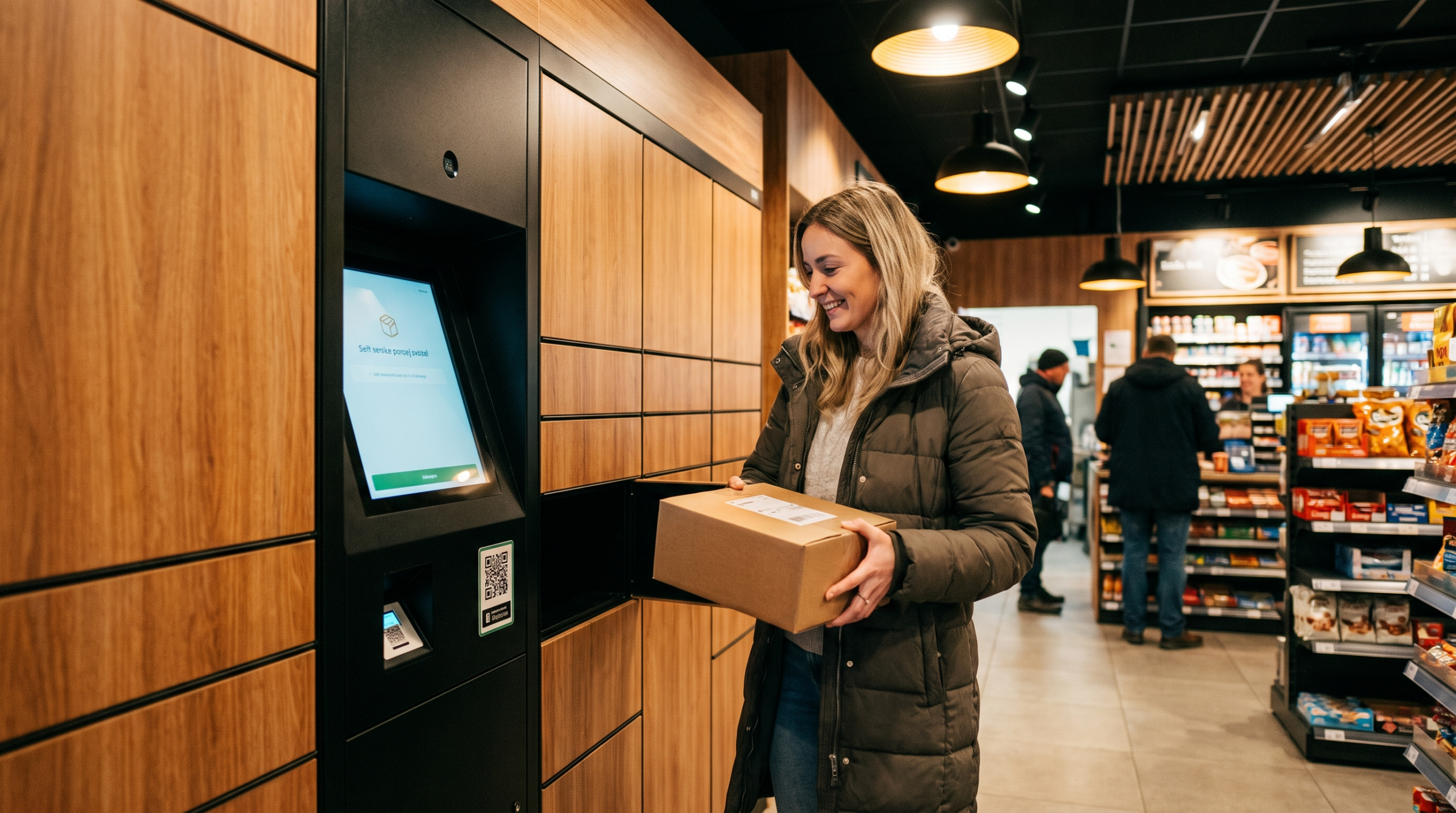
Every package you send to a home address in 2026 incurs a residential surcharge, a delivery-area surcharge if the ZIP code is unlucky, and a real chance of a «customer not home» delivery attempt that results in a return-to-sender fee. There is one routing option that eliminates most of those costs at once: send the package to a package locker or a carrier access point instead of the front door.
This guide explains how UPS Access Point, FedEx OnSite and Hold at Location, USPS Smart Locker, and third-party locker networks work in 2026, exactly which fees are eliminated, what it costs (usually nothing), and how to get customers to choose these options without hurting conversion rates.
All fee figures are indicative list rates; negotiated terms and service levels may affect these amounts.
Why the front door is the most expensive address you can ship to
Carriers price the last mile based on how difficult it is. A residential stop costs them more than a commercial dock, so they pass on the extra cost. In 2026, the residential surcharge rose again as part of the annual rate increase, and it adds to other accessory charges.
| Fee (2026 list, approximate) | UPS Ground | FedEx Ground / Home Delivery | Does this apply to a locker or an access point? |
|---|---|---|---|
| Residential surcharge | ≈ $6.00–6.50 per package | ≈ $6.00–6.50 per package | No |
| Delivery Area Surcharge (Residential) | ≈ $6.50–8.00 | ≈ $6.50–8.00 | Usually no (commercial DAS may still apply in remote ZIP codes) |
| Signature required | ≈ $6.50–8.00 | ≈ $6.50–8.00 | No (ID check at pickup is free) |
| Return to sender after failed attempts | Full return freight | Full return freight | Rare (held for 5–7 days, then returned) |
| Peak residential surcharge (Oct–Jan) | ≈ $0.75 per package | ≈ $0.80 per package | No |
Do the math: A $9.40 Ground label to a rural home can incur $13 to $15 in ancillary charges. Redirect that package to a locker, and most of that charge disappears.
A Comparison of the 2026 Locker and Access Point Networks
UPS Access Point
More than 21,000 locations in the U.S. (The UPS Store, CVS, Michaels, Advance Auto Parts, independent stores) plus locker banks. Shipping to an Access Point or holding at a UPS Customer Center involves no surcharge in 2026. Packages are held for five business days; many locations are open late or 24/7. You select «Deliver to UPS Access Point» when creating the label, or the recipient can redirect the package via UPS My Choice (free for Access Point redirects).
FedEx OnSite and FedEx Lockers (Hold at Location)
Roughly 14,000 OnSite locations (Walgreens, Dollar General, FedEx Office) and a growing network of lockers. "Hold at Location" is free for FedEx Express and Ground; lockers hold packages for seven days. Size limits apply: most lockers accept packages up to approximately 18 × 18 × 24 in and 40 lb.
USPS Smart Locker and Hold for Pickup
USPS continues to expand its Smart Lockers in post offices, which are free for both senders and recipients. Since USPS does not charge a residential surcharge, the savings here come mainly from reduced failed deliveries and porch theft, rather than from fees.
Third-party networks
Amazon Hub Counter/Locker, Luxer One, Parcel Pending, and retailer-operated lockers accept deliveries from any carrier in most cases. They are useful for apartment buildings but generally do not affect your carrier's pricing.
| Network | Rentals (approx.) | Shipping fee to that location | Hold time | Max size |
|---|---|---|---|---|
| UPS Access Point | 21,000+ | $0 | 5 business days | Varies; lockers ≈ 20 lb / 24 in |
| FedEx OnSite / Locker | 14,000+ | $0 | 5–7 days | ≈ 40 lb, 18×18×24 in |
| USPS Smart Locker | Expanding (in thousands) | $0 | ≈ 5 days | Locker cell size |
| Amazon Hub / Luxer / Parcel Pending | Tens of thousands | $0 to recipient; carrier pricing remains unchanged | 3–7 days | Locker cell size |
Real-world savings calculations for a small shipper
Consider a store that sends 400 ground parcels per month, 85 % of which are residential, and 15 % of which are in ZIP codes within the delivery area. Convert just one in five residential shipments to an Access Point.
- Residential surcharges avoided: 68 parcels × ≈ $6.25 = ≈ $425 per month
- Delivery-area surcharges avoided: ≈ 10 packages × ≈ $7.25 = ≈ $73 per month
- Failed deliveries and reships avoided (2 % in volume, ≈ $18 each): ≈ $30 per month
That is roughly $6,300 per year from a checkout option that costs nothing to offer. If you increase the opt-in rate to 40 %, the figure doubles.
How to Get Customers to Choose a Locker
- Show it at checkout, not afterward. Shopify, WooCommerce, and BigCommerce apps (and carrier-native «pickup point» widgets) let shoppers choose a nearby location on a map.
- Price it. Offer free locker delivery and set home delivery fees to $2 to $4. Shoppers in cities and apartment buildings will switch quickly; the discount is still smaller than the surcharge you avoid.
- Highlight the benefits: No porch theft, pickup at 9 p.m., no missed delivery attempts. These messages are more effective than «cheaper for us.».
- Use it for returns as well. Drop-offs at Access Points are free for customers and less expensive than a scheduled pickup.
- Turn on My Choice / Delivery Manager redirects. Even if the customer chooses home delivery, they can have the package sent to a locker at no charge, saving you the risk of a second delivery attempt.
When Lockers Are the Wrong Choice
Avoid using lockers for oversized or heavy items (most lockers have a weight limit of about 40 lb), hazardous materials, perishables, high-value goods that require an adult signature, and rural customers with no pickup location within 10 miles. Also be mindful of hold times: a five-day window during a holiday week can result in a return, so set up pickup reminders.
Conclusion: The cheapest address is often not a home
Parcel lockers and access points allow you to ship to them for free, eliminate residential and most delivery-area surcharges, eliminate signature fees, and virtually eliminate failed deliveries. For a small shipper, that amounts to thousands of dollars a year without having to change carriers or contracts.
Want to see the difference in fees for your own shipments? Compare discounted UPS, FedEx, and USPS rates on ShipPayLess and route packages to the cheapest option—home or locker—with a single click.
 EN
EN  FR
FR