
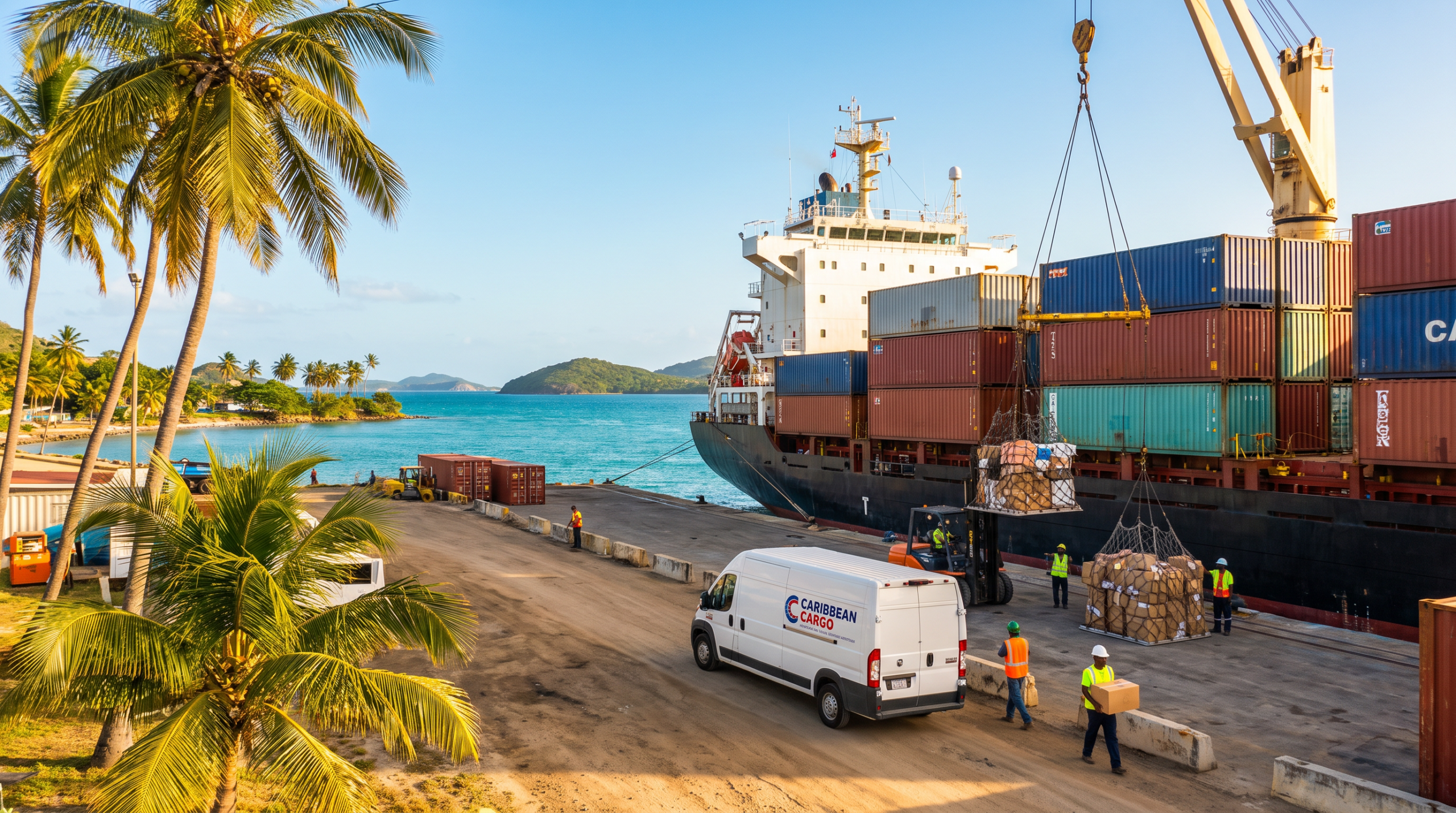
Puerto Rico is a U.S. territory. Its residents are U.S. citizens, its post offices are part of the U.S. Postal Service, and its ZIP codes are stored in the same national database as Ohio’s. So why does Shipping to Puerto Rico Why does it so often cost twice as much as the same box would cost to a mainland address?
The short answer: two of the three major carriers treat the island as an international destination, and one does not. Choose the wrong one, and you'll pay a delivery area surcharge, an extended zone rate, and a customs handling fee on a shipment that technically never left the country.
This guide breaks down what each carrier actually charges in 2026, where the hidden fees are, and the few changes that reliably reduce the cost of shipments to islands by 25 to 40 percent.
Why the carriers disagree about Puerto Rico
The USPS classifies Puerto Rico as entirely domestic. You print a label the same way you would for a Texas address: PR as the state, United States as the country, no customs form, no commercial invoice, and no brokerage. Flat Rate pricing is exactly the same as on the mainland.
UPS and FedEx route shipments through their international platforms. Their software will prompt you to fill out a customs declaration even though the shipment remains within U.S. customs territory. More importantly, both companies apply Zone 7-plus pricing and a delivery area surcharge to island destinations—typically ranging from 15 to 30 percent on top of the base rate.
On top of the 2026 general rate increases — UPS raised base and additional Air and Ground rates by an average of 5.9 percent in December 2025, and FedEx implemented an average 5.9 percent increase effective January 5 — and the gap between USPS and the integrators on this route has widened, not narrowed.
2026 Cost Comparison: How Much a Package Actually Costs
The table below shows typical published shipping costs for a package sent from the continental United States to San Juan. The figures are approximate and vary depending on the ZIP code of origin, dimensions, declared value, the fuel surcharge in effect, and your negotiated agreement.
| Service | 2-lb package | 10-lb package | Typical transit | Customs paperwork | Delivery Area Surcharge |
|---|---|---|---|---|---|
| USPS Ground Advantage | ~$12 | ~$23 | 3–6 business days | None | None |
| USPS Priority Mail | ~$16 | ~$41 | 2–4 business days | None | None |
| UPS Ground | Higher | Higher | 3–7 business days | Requested by the system | Yes (15–30%) |
| FedEx Ground / Express | Higher | Higher | 1–5 business days | Requested by the system | Yes (15–30%) |
For most e-commerce packages weighing less than 70 lb, USPS comes out on top in terms of both price and paperwork. That’s unusual—usually, cheaper means slower or more complicated. Here, it means neither.
Where UPS and FedEx Still Make Sense
USPS isn't the best option for every shipment to an island. Three situations change the equation:
- Weight over 70 lb. The USPS limits domestic parcels to 70 lb. UPS accepts packages weighing up to 150 lb to the island, so anything heavier must be shipped via a private carrier or as freight.
- Guaranteed transit. If you are contractually committing to a two-day delivery, FedEx and UPS air services offer a service guarantee that USPS Priority Mail does not.
- High declared value. Coverage limits and claims procedures for integrators are more predictable for shipments worth more than a few thousand dollars.
Apart from those three cases, routing island parcels to the USPS by default is the single largest cost savings available on this route.
Six fee traps that drive up shipping costs to islands
1. Setting your shipping platform to use a carrier by default
Most multi-carrier platforms apply a single rate-shopping rule to all destinations. If your rule favors UPS Ground for the mainland, it usually favors UPS Ground for Puerto Rico as well—which is the wrong choice. Create a destination-specific rule for PR, VI, GU, and AS ZIP codes.
2. Formatting the address for the wrong carrier
The USPS expects "PR" to be entered as the state and "United States" as the country. UPS and FedEx expect "Puerto Rico" to be entered in both the state and country fields. Inconsistent formatting is a leading cause of address correction fees, which range from $20 per parcel and increase every January.
3. Missing the urbanization line
Many Puerto Rican addresses include an “urbanization” (URB) identifier that distinguishes between developments with the same street names. Omitting it does not always result in validation failure, but it does lead to failed delivery attempts and return-to-sender charges.
4. Ignoring dimensional weight
The island lane relies heavily on air transport, so DIM pricing has a greater impact. A 12 × 12 × 12-inch box is billed at roughly 12 lb using a 139 divisor, regardless of its contents. Reducing the size of that box to 10 × 10 × 10 lowers the billable weight to about 7 lb—a 40 percent reduction before you even consider carrier selection.
5. Declaring a value you don't need
Declared value charges are assessed per hundred dollars. Shippers routinely declare the full retail price on items they would replace at cost. Declaring replacement cost instead of retail price is a legitimate and immediate way to save money.
6. Not auditing the invoice
Delivery area surcharges are applied automatically based on ZIP code and are frequently applied incorrectly. Generating a quarterly report filtered by PR ZIP codes and comparing the surcharge lines to the published tables is one of the most effective audits available for any route.
What about taxes and duties?
There are no U.S. customs duties on goods shipped from the mainland to Puerto Rico—it is considered domestic commerce within U.S. customs territory. However, Puerto Rico imposes its own sales and use tax (IVU), and certain goods are subject to excise taxes administered by Hacienda, the island’s treasury department. In most B2C scenarios, these taxes are the recipient’s responsibility, but if you’re shipping B2B or holding inventory on the island, consult a tax advisor before assuming these taxes don’t apply to you.
A Five-Minute Checklist Before You Ship
- By default, route PR ZIP codes to the USPS; make exceptions for weight, guarantees, and high-value items
- Verify the address against the USPS database, including the URB line
- Check the box dimensions against the DIM weight before you tape it shut
- Declare replacement cost, not retail price
- Skip Priority Mail unless delivery time is truly important — Ground Advantage covers most orders
- Audit last quarter’s PR invoices for incorrectly applied delivery area surcharges
Ship the island for what it should cost
Puerto Rico is often viewed as an expensive, complicated destination mainly because shippers start with the wrong default setting and never revisit it. The route is domestic, there may be no paperwork at all, and the price difference between the right carrier and the wrong one is routinely 30 percent or more per package.
At ShipPayLess We compare real-time carrier rates for every shipment and highlight any surcharges before you purchase a label. Run your next shipment to Puerto Rico through our rate comparison tool and see how much you've been overpaying.
All rates, surcharges, and thresholds in this article are for reference only and are subject to change based on carrier rates, fuel indexes, and your negotiated agreement. Confirm current pricing with your carrier before shipping.
 EN
EN  FR
FR