
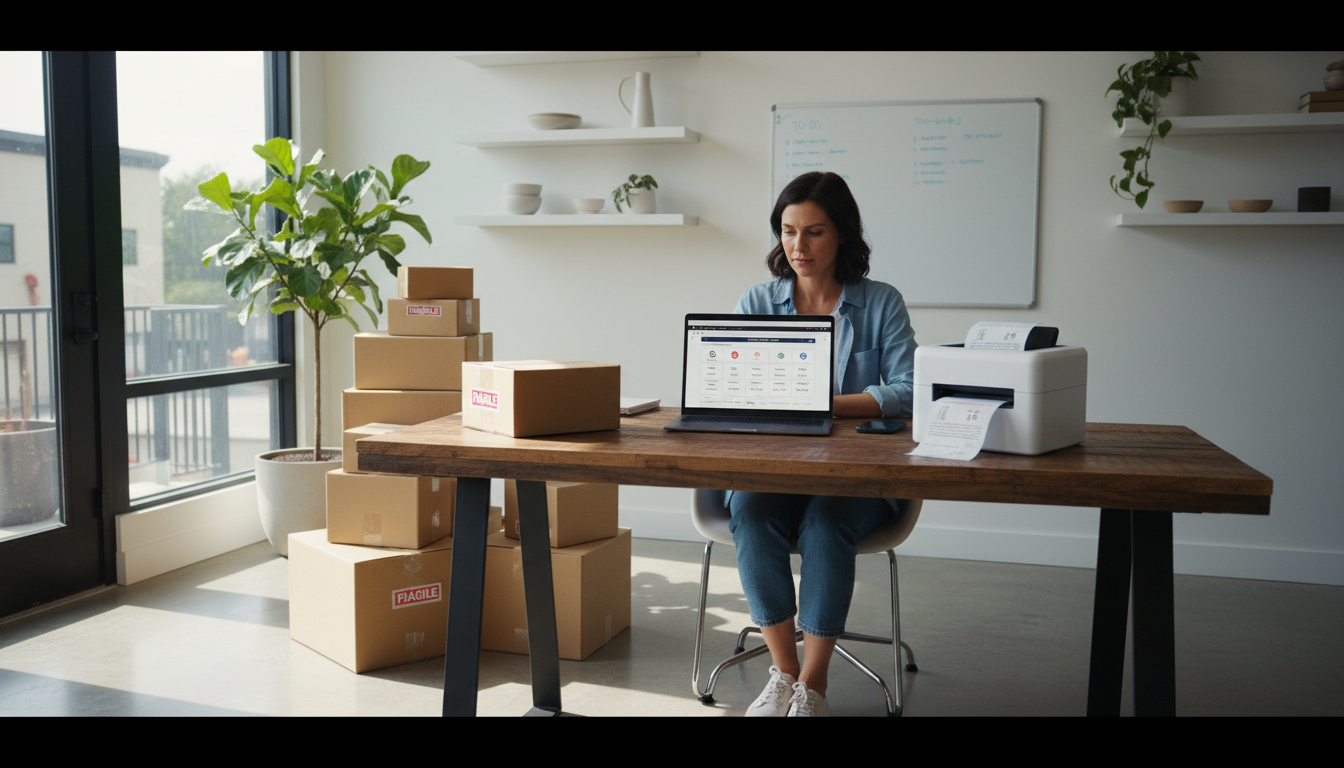
Walk into a carrier's service counter or a retail shipping store, hand over a package, and you'll pay the highest price that carrier lists. That price is called the retail rate — and in 2026, it can run 20% to 89% higher than the commercial shipping rates the exact same rates that carriers offer to anyone who ships through an online account or platform.
The package doesn’t move any faster. It doesn’t offer better tracking or better handling. The only difference is where the label was purchased. For a business that ships even just a few packages a week, that difference adds up to hundreds or thousands of dollars a year left on the counter.
Here’s how retail and commercial pricing really work in 2026, how wide the gap is among each carrier, and how to make sure you never pay walk-up prices again.
Retail vs. Commercial Rates: What’s the Difference?
Every major U.S. carrier publishes at least two price lists for the same services:
- Retail rates — what you pay at the post office counter, a carrier store, or walk-up locations like The UPS Store or FedEx Office. These are the highest published prices.
- Commercial rates — discounted pricing for labels purchased online, through a carrier account, or via shipping platforms. Despite the name, you do not need to be a registered company: any shipper with a free online account or platform login is eligible.
In addition to commercial base rates, there are negotiated discounts for high-volume shippers—but the first and easiest step is simply switching from retail to commercial pricing, which requires no volume commitment at all.
How Big Will the Gap Be in 2026?
Examples of typical shipping rates (actual prices vary by zone, weight, service, and agreement):
- USPS Ground Advantage — A 2-pound package that costs roughly $9–$12 at the counter often costs around $5–$7 with commercial rates, a savings of 30–45%. For lightweight packages, commercial Ground Advantage pricing can be even lower than retail rates.
- USPS Priority Mail — Commercial pricing is typically 15–30% lower than retail for the same package, the same zone, and the same delivery window.
- UPS and FedEx — The «daily rates» listed in-store are the maximum. Creating an online account instantly unlocks published discounts that can reach 50% or more for ground services and up to 89% for some air services during promotional periods, before any negotiation.
- Retail shipping stores — Franchise counters add their own markup on top of retail rates. It is common to pay $25 for a package that would cost $11 at retail.
Multiply an average overpayment of $6 by 20 packages a month, and you get roughly $1,400 a year—for buying the same service at a more expensive place.
Why Carriers Price It This Way
Counters are expensive to operate: staff, real estate, and manual data entry. Online and platform shipments arrive pre-labeled, pre-paid, and pre-manifested, which costs carriers far less to process. Commercial pricing passes on part of those savings—and it’s also how carriers compete for e-commerce volume, which is where parcel growth will be concentrated in 2026. Retail pricing, meanwhile, quietly subsidizes the convenience of walking in unprepared.
How to Unlock Commercial Shipping Rates
You don't need a contract or a minimum volume to stop paying retail prices. Your options, from simplest to most powerful:
- Open free carrier accounts. USPS, UPS, and FedEx all offer free online accounts that include commercial or discounted rates.
- Ship through a platform or reseller. Shipping platforms aggregate millions of packages and pass on pre-negotiated commercial-plus discounts to users starting with the very first label—often the best rates available to low-volume shippers.
- Compare prices across carriers for each package. Commercial rates vary by route and weight: USPS is often the best option for shipments under 5 lb, while UPS and FedEx are better for heavier shipments or Zone 2 shipments. Comparing rates for each label ensures you get the lowest commercial price every time.
- Watch out for the surcharges. Commercial base rates still include fuel, residential, and area surcharges. A true comparison is always the all-in price.
- Negotiate once you have volume. If you ship roughly 50–100 packages a week, carriers will offer discounts below their published commercial rates. Your shipping history gives you leverage.
When Retail Still Makes Sense
To be fair, it’s worth pointing out: for a single urgent package with no label prepared, using the counter is fine—you’re paying for convenience just this once. The problem lies in routine retail shipping: businesses that send dozens of packages a month at walk-up rates are effectively giving away their profit margin to the carrier. If shipping is part of your business, commercial rates are the baseline, not the premium option.
The Bottom Line
Same box, same truck, same delivery day—up to 89% difference in price depending on where you bought the label. In a year when carriers have raised base rates again, switching from retail to commercial shipping rates is the single fastest way for any shipper to save money, and it takes just minutes to set up.
Ready to stop paying retail prices? ShipPayLess gives you instant access to heavily discounted commercial rates across carriers—no volume commitment, no monthly fee. Compare your rates now and see exactly how much the same package costs when you stop paying retail prices.
All figures above are estimates for 2026 and vary by zone, weight, service level, and carrier agreement.
 EN
EN  FR
FR