
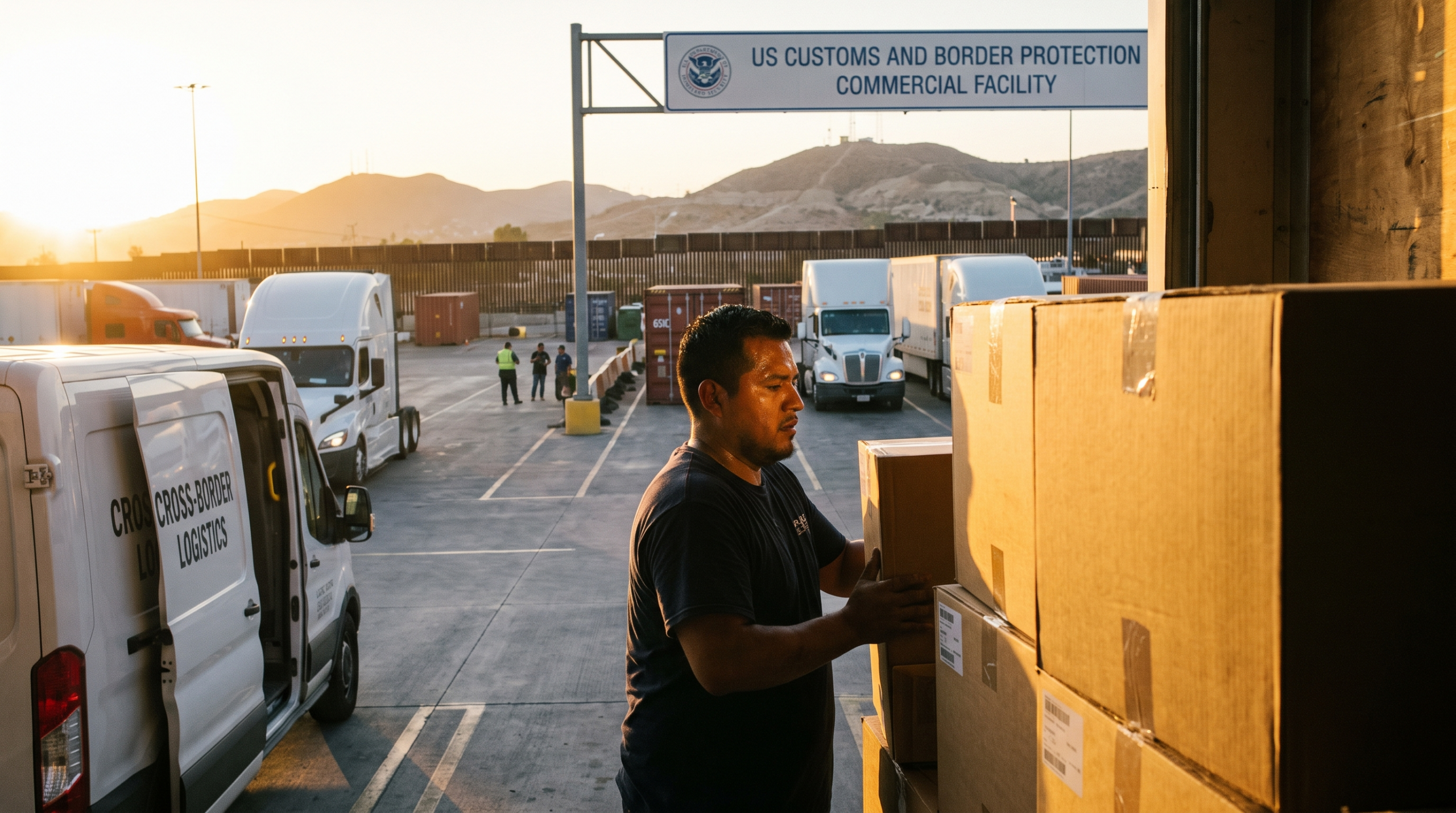
Mexico looks like the easy international lane. It shares a border, it is a USMCA partner, and ground transit from Texas takes days rather than weeks. Then the first customs invoice arrives and the math stops looking friendly.
The problem is not the freight rate. It is everything stacked on top of it: two separate de minimis thresholds, 16% IVA on nearly every shipment, brokerage fees that carriers bill per parcel, and a 2026 customs reform that pushed tariffs on many product categories well above what shippers were budgeting.
Here is what shipping to Mexico actually costs in 2026, and seven ways to cut the bill on every parcel you send.
The two thresholds that decide your cost
Most shippers assume Mexico has one de minimis value. It has two, and they do different jobs:
- $50 USD — below this, a shipment is generally free of both duty and tax.
- $117 USD — for qualifying USMCA-origin goods, duty relief extends to this value, but tax does not. Between $50 and $117 you can be duty-free and still owe IVA.
The critical caveat: these reliefs are aimed at low-value and person-to-person shipments. Commercial imports do not get a free pass. If you are a business shipping inventory or fulfilling orders at volume, plan on duties and taxes applying by default.
What lands on the invoice
| Charge | Typical 2026 level | Applies to |
|---|---|---|
| Import duty | 0% (USMCA qualifying) to 35–50% (reformed categories) | Customs value |
| IVA (VAT) | 16% | Customs value + duty |
| Carrier brokerage | ~$15–$40 per parcel | Per shipment |
| Disbursement fee | 2%–3% of duties advanced | When carrier fronts the tax |
| Remote area surcharge | $5–$20+ | Outside major metros |
All figures are indicative and vary by carrier, service level and negotiated agreement.
The 2026 customs reform nobody budgeted for
Effective January 2026, Mexico’s customs law reform raised tariffs sharply on more than 1,400 product lines from countries without a free trade agreement. Textiles, footwear, steel, plastics, small appliances and consumer electronics were hit hardest, with rates landing in the 35% to 50% range.
The practical consequence for US shippers: country of origin now matters more than country of shipment. A parcel that leaves Dallas but contains goods manufactured in a non-FTA country does not get USMCA treatment. It gets the reformed tariff.
If your catalogue includes imported inventory that you resell across the border, audit your origin data before your customer does.
USMCA: free, but only if you prove it
Roughly 99% of US-origin exports qualify for duty-free entry under USMCA. The relief is not automatic. You need a certification of origin, and in 2026 it is expected as a digital document filed before the shipment moves, not produced later on request.
Three rules that trip shippers up:
- Certification is the exporter’s job. If you leave it to the carrier, expect a fee and a delay.
- Origin rules are product-specific. Textiles and automotive parts have strict regional value content tests. « Assembled in the US » is not automatically « US origin. »
- One certificate can cover multiple shipments. A blanket certification valid for up to twelve months saves per-parcel paperwork on repeat lanes.
Carrier comparison for US–Mexico parcels
| Option | Transit | Best for | Watch out for |
|---|---|---|---|
| USPS International | 7–20 days | Light, low-value parcels | Thin tracking, slow clearance |
| UPS Worldwide | 2–5 business days | Documented commercial shipments | Brokerage plus disbursement fees |
| FedEx International | 2–5 business days | Metro coverage, time-definite | Remote area surcharges |
| DHL Express | 2–4 business days | Fastest clearance | Highest base rate |
| Cross-border consolidator | 5–10 days | Volume, repeat lanes | Requires steady daily volume |
Seven ways to pay less
1. Split orders around the $50 line
Below $50, duty and tax generally disappear. On a $90 order, two separate $45 shipments can beat one $90 shipment even after the second label. Run the math per order value band rather than assuming consolidation always wins.
2. File your own USMCA certification
Letting the carrier prepare origin documentation costs a per-shipment fee and slows clearance. A blanket certification you issue yourself covers a year of shipments for the cost of one afternoon.
3. Use your own customs broker
Carrier brokerage is convenience pricing. On steady volume, an independent broker typically undercuts the integrated carrier fee, and you keep the entry data rather than renting it.
4. Ship DDP, not DAP
When the recipient gets a surprise bill at the door, refusal rates spike. A refused parcel costs you the outbound freight, the return freight and the sale. Prepaying duty and building it into your price protects the whole transaction.
5. Consolidate to a Mexican fulfillment point
If you ship more than a handful of parcels a week to Mexico, one bulk import clearing customs once, then distributed domestically, beats dozens of individual entries each carrying their own brokerage fee.
6. Get your HS codes right the first time
A misclassified code either overcharges you on duty or triggers an inspection that holds the parcel for days. Both cost money. Classify once, store the code against the SKU, and reuse it.
7. Right-size the box
Dimensional weight rules apply on international air lanes the same way they do domestically. Cutting one inch off each dimension of a mid-size box can drop a full billable weight tier.
Common mistakes that cost real money
- Understating value. Mexican customs compares declared values against reference pricing. A low declaration invites inspection, penalties and delay.
- Vague descriptions. « Samples » or « goods » guarantees a hold. Describe the item, material and quantity.
- Missing recipient tax ID. Commercial consignees need an RFC number. Without it, clearance stalls.
- Shipping restricted goods blind. Cosmetics, supplements and food often require COFEPRIS registration. No registration, no entry.
The bottom line
Mexico rewards shippers who prepare and punishes those who improvise. Know which side of the $50 and $117 thresholds each order falls on, certify origin properly, take brokerage off the carrier’s meter where you can, and ship DDP so nobody refuses a parcel at the door.
At ShipPayLess, we help shippers compare live rates across carriers, strip out avoidable accessorials and cut the landed cost of every cross-border parcel. Compare your Mexico rates and see what you should actually be paying.
All rates, fees and thresholds cited are indicative and vary by carrier, service, product category and negotiated agreement.


 FR
FR  EN
EN