
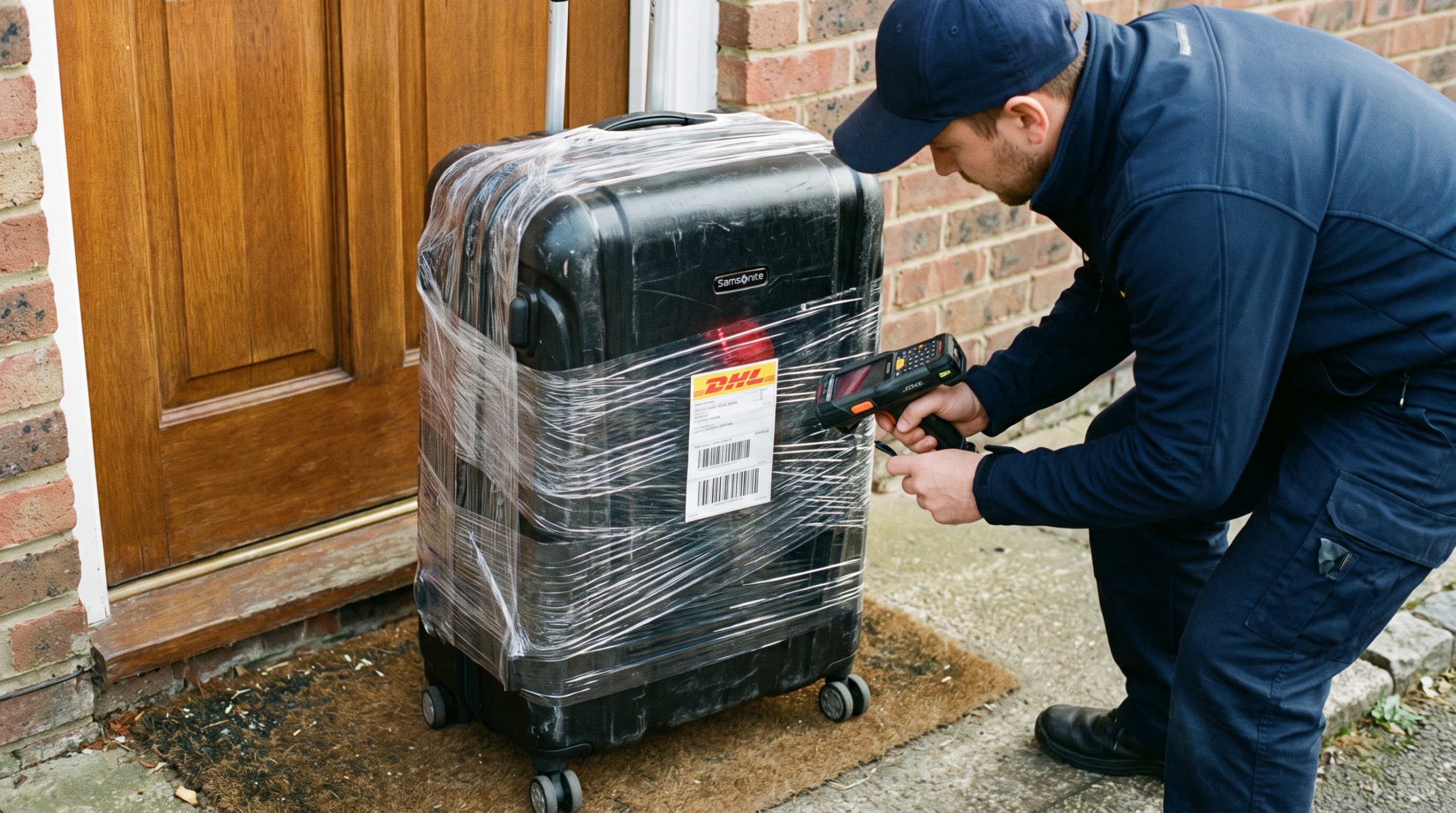
Every major US airline raised checked bag fees again in April 2026. A first bag now runs $45 to $50 each way on the legacy carriers, a second bag $55 to $60, and ultra-low-cost airlines charge $79 or more once you are at the gate. Check one bag on a round trip and you are out roughly $90 before overweight or oversize penalties. A family of four with two bags each can pay more than $360 in baggage fees on a single vacation.
That math is why shipping luggage has quietly become a cost-saving move rather than a luxury. A standard suitcase shipped by ground between two US metro areas costs $25 to $40 in carrier charges, and dedicated luggage shipping services start around $25 per bag. For heavy bags, long trips, golf clubs, skis or anyone travelling with medical equipment, shipping is often cheaper than the airline, and it arrives before you do.
This guide breaks down what shipping luggage really costs in 2026 across USPS, UPS, FedEx and the luggage forwarding services, when it beats airline fees, when it does not, and seven ways to pay less per bag.
Airline bag fees in 2026: the number you are competing against
Here is what the major US carriers charged for domestic checked bags after the April 2026 increases (indicative, per bag, each way, paid in advance online):
| Airline | 1st checked bag | 2nd checked bag | Overweight 51-70 lb |
|---|---|---|---|
| American, Delta, United | $45-$50 | $55-$60 | $100-$150 |
| JetBlue | $45-$60 | $60-$75 | $150 |
| Alaska | $45 | $55 | $100 |
| Spirit, Frontier | $55-$79+ | $65-$89+ | $75-$100 |
| Southwest | $35 (first bag no longer free since 2025) | $45 | $150 |
Round-trip, a single bag at a legacy carrier costs $90 to $100. A bag that tips 51 lb adds $200 to $300 round-trip. Those are the figures your shipping quote needs to beat.
What shipping luggage costs by carrier in 2026
Airlines price by bag. Carriers price by weight, dimensions and distance (zone). A typical packed medium suitcase is 24 x 16 x 10 inches and 25 to 40 lb, which means dimensional weight of roughly 28 lb at UPS and FedEx (divisor 139) and you are billed on the greater of actual or DIM weight. Indicative 2026 costs for a 30 lb suitcase, residential delivery, published retail rates:
| Option | Zone 2-4 (under 600 mi) | Zone 7-8 (cross-country) | Transit | Notes |
|---|---|---|---|---|
| USPS Ground Advantage | $32-$45 | $60-$85 | 2-5 days | No residential surcharge; free pickup; $100 included insurance |
| UPS Ground | $38-$55 | $70-$95 | 1-5 days | Add $6.45+ residential and fuel (about 20%+) |
| FedEx Home Delivery | $38-$55 | $70-$95 | 1-5 days | Similar surcharges; Saturday delivery included in many ZIPs |
| LugLess / ShipGo (ground) | $25-$45 | $55-$80 | 2-5 days | Resell discounted UPS/FedEx capacity; door-to-door |
| Luggage Forward / Send My Bag | $60-$100 | $90-$140 | 2-3 days, guaranteed | White-glove, tracking, hotel coordination; premium priced |
The pattern is clear: for a short-haul trip, shipping a standard bag costs about the same as one airline fee each way and less once the bag is heavy or the trip involves two or more bags. For a cross-country trip, retail UPS or FedEx rates roughly match or exceed airline fees, so you need discounted commercial rates or a luggage service to come out ahead.
When shipping luggage beats the airline
- Heavy bags. A 60 lb suitcase costs $100 to $150 in overweight fees each way on a plane. Ground shipping the same bag adds only $10 to $20 versus a 30 lb bag.
- Oversized items. Golf clubs, skis, snowboards and surfboards trigger $75 to $200 airline oversize fees. Ground carriers charge an additional handling fee (around $20 to $30 at UPS and FedEx in 2026) instead.
- Two or more bags per person. The second-bag fee is where airlines make their margin. Shipping the second and third bags while carrying one on board is the sweet spot.
- Long stays and relocations. Students, snowbirds and remote workers moving for a season can ship boxes and bags for a fraction of excess baggage or moving costs.
- Connections and tight itineraries. A shipped bag cannot be mishandled at a hub. It is waiting at the hotel or rental when you arrive.
When the airline still wins
Be honest about the math. Shipping loses when your trip is less than three days and you have no time buffer for ground transit, when your destination is a rural ZIP subject to a delivery area surcharge ($4.40 to $16.50 per package in 2026), or when you would be shipping a light carry-on that flies free anyway. Overnight and 2-day air shipping of a suitcase runs $90 to $200+ and almost never beats a bag fee. Ship ground, ship early, or do not ship at all.
How to pack a suitcase for shipping
Carriers will accept a bare suitcase, but a hard shell scratched by a conveyor belt or a soft bag with a torn strap is rarely covered by a claim. Best practices:
- Put the suitcase in a box or wrap it in stretch film with corner protection. A box also lets you control dimensions and avoid the irregular-shape additional handling fee.
- Remove or tape down retractable handles and wheels; do not lock the bag with a non-TSA lock.
- Keep it under 50 lb and under 108 inches in length plus girth to stay clear of oversize charges.
- Never ship lithium batteries loose, aerosols, lighters, alcohol or cash. USPS now bills a $50 hazmat noncompliance fee on undeclared items.
- Tape a copy of the label inside the bag and use a ship-to-hotel address with the guest name and arrival date, after confirming the hotel accepts packages.
Seven ways to ship luggage for less in 2026
- Use commercial rates, not counter prices. Retail counter rates at UPS and FedEx run 20% to 60% above the online commercial rates that shipping platforms and resellers offer. Never walk up to the counter with a suitcase.
- Ship ground with 5+ days of buffer. Ground is the only service that consistently beats airline fees on price.
- Ship to a commercial address. A hotel, office or UPS Access Point avoids the $6.45 to $7.00 residential surcharge and removes failed-delivery risk.
- Consolidate. Two bags to the same hotel on the same day may qualify for multi-piece pricing, and one box of clothes is cheaper than two suitcases.
- Go light and compact. A vacuum-compressed duffel in a 20 x 14 x 10 box bills at 20 lb DIM instead of 28 lb, saving $5 to $12 per parcel.
- Compare USPS on short hauls. With no residential or fuel surcharge on Ground Advantage, USPS frequently wins within 600 miles.
- Insure only what matters. Carrier declared value runs $1 to $1.50 per $100 above the first $100. Third-party coverage costs 30% to 50% less, and most clothing is not worth insuring at all.
Sample trip: family of four, Chicago to Orlando, one week
Four checked bags on a legacy carrier: 4 x $50 x 2 legs = $400, more if any bag is overweight. Shipping four 30 lb bags by discounted ground to the resort’s package desk: roughly 4 x $34 = $136 each way, or about $272 round-trip, with the bags waiting in the room on arrival. Carry on the essentials and ship three bags instead of four and the total drops to about $204, a saving of nearly $200 on a single vacation.
Bottom line
Shipping luggage is not always cheaper than the airline, but in 2026 it is cheaper far more often than most travellers assume, especially for heavy, oversized or multiple bags on trips with a few days of lead time. The key is to ship ground at commercial rates, pack smart to avoid surcharges, and address the bag to a commercial location.
ShipPayLess gives you discounted UPS, FedEx and USPS rates on every parcel, including suitcases, golf bags and ski cases, with no monthly fee or minimum volume. Get a quote for your next bag and see how much you save versus checking it.
All rates and fees in this article are indicative 2026 figures that vary by carrier agreement, service level, zone, dimensional weight, surcharges and declared value. Confirm current pricing before you ship.
 FR
FR  EN
EN