
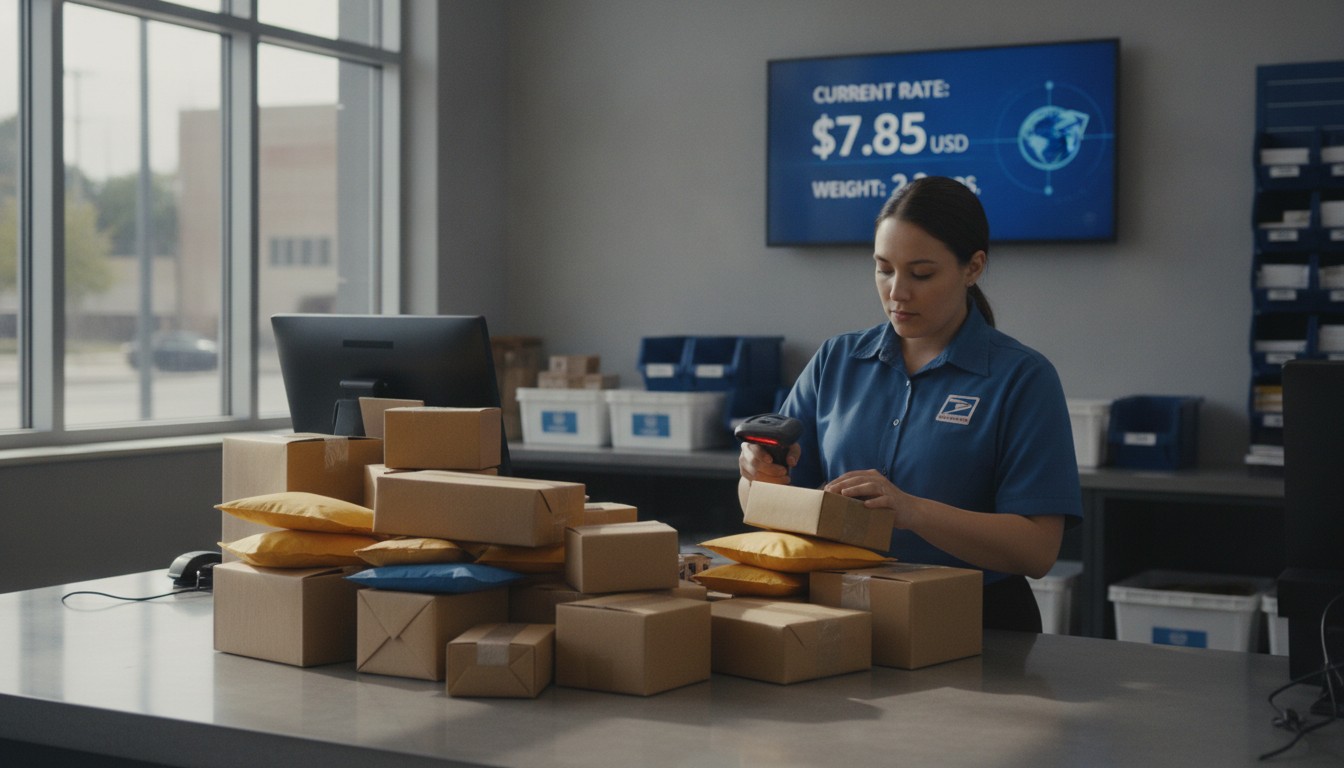
USPS has long been the refuge for shippers squeezed by UPS and FedEx pricing. That refuge just got more expensive. On July 12, 2026, USPS rolled out a set of pricing changes that quietly reshape what you pay on every parcel — especially bulky, lightweight ones. If USPS Ground Advantage or Priority Mail is part of your shipping mix, these changes deserve a close look.
Here’s what changed, who gets hit hardest, and the moves that keep your average cost per parcel down.
The Big One: a Lower DIM Divisor
The headline change is dimensional weight. For packages larger than 1,728 cubic inches (one cubic foot), USPS reduced its DIM divisor from 166 to 139 — matching the stricter standard UPS and FedEx have used for years.
Why it matters: billable weight is length × width × height ÷ divisor, and you pay the greater of actual or dimensional weight. A smaller divisor means a bigger billable weight for the exact same box.
| Box | Actual weight | Billable at 166 (before) | Billable at 139 (now) |
|---|---|---|---|
| 14 × 14 × 14 in | 6 lb | 17 lb | 20 lb |
| 16 × 14 × 12 in | 7 lb | 17 lb | 20 lb |
| 18 × 16 × 12 in | 8 lb | 21 lb | 25 lb |
Illustrative figures; actual charges vary by service, zone and your negotiated or platform rates.
Every Fraction of an Inch Now Rounds Up
USPS also tightened how dimensions are measured: each side now rounds up to the next whole inch. A 12.2-inch side bills as 13 inches; a 9.6-inch side bills as 10. Stack that rule across length, width and height and a box can jump a full rate tier without anything inside it changing. Automated dimensioners in USPS facilities catch under-declared dimensions, so optimistic measuring gets rebilled — with adjustment fees.
New and Adjusted Fees to Watch
- Ground Advantage repricing: mid-year adjustments touched several weight and zone cells, with bulky lightweight parcels seeing the largest effective increases.
- Nonstandard fees: parcels over 22 inches on the longest side, over 30 inches, or over 2 cubic feet keep triggering extra charges — and those thresholds now interact with the round-up rule.
- The broader 2026 context: carriers announced average increases of 5.9% this year, but with surcharge and DIM changes layered in, many shippers are seeing real cost growth of 7–12%.
Who Feels This Most
The change targets « fluffy » freight: apparel in oversized boxes, home goods, toys, pillows and bedding, party supplies — anything light for its size in a box over one cubic foot. If your average parcel is small and dense (under 1,728 cubic inches), the DIM change doesn’t apply to you, though the round-up rule still can.
Five Ways to Pay Less After July 2026
1. Audit every box over one cubic foot
List your packaging sizes and flag anything above 1,728 cubic inches. Those are the parcels whose billable weight just jumped ~19%. Often a one-inch reduction on a single side pulls the box under the threshold entirely.
2. Design packaging just under whole-inch breakpoints
With round-up measuring, an 11.8-inch side bills like 12 inches — but a 12.1-inch side bills like 13. Spec custom boxes a quarter-inch under whole numbers to stop giving away free inches.
3. Switch soft goods to mailers
Poly mailers and padded envelopes cut volume 60–80% versus boxes and usually stay below DIM thresholds. For apparel and textiles, this is the single fastest fix.
4. Re-run your carrier comparison
USPS matching the 139 divisor changes the math on lanes where it used to win by default. On some profiles USPS is still cheapest; on others UPS or FedEx economy services now come out ahead. The only way to know is to rate-shop each parcel profile across carriers.
5. Track your billed vs. expected weight
Compare invoiced billable weights against your own measurements monthly. Dimension adjustments are a growing share of parcel billing errors, and documented disputes get refunded.
Conclusion: the Cheap-by-Default Era Is Over
The July 2026 USPS rate changes close the gap that made USPS the automatic choice for big, light parcels. The winners from here on are shippers who right-size their packaging and route every parcel to whichever carrier prices it best that day.
ShipPayLess compares discounted rates across major carriers in real time, so every shipment goes out at the lowest real cost — DIM weight, fees and all. Get an instant quote at shippayless.com and see what your parcels should really cost.
 FR
FR  EN
EN